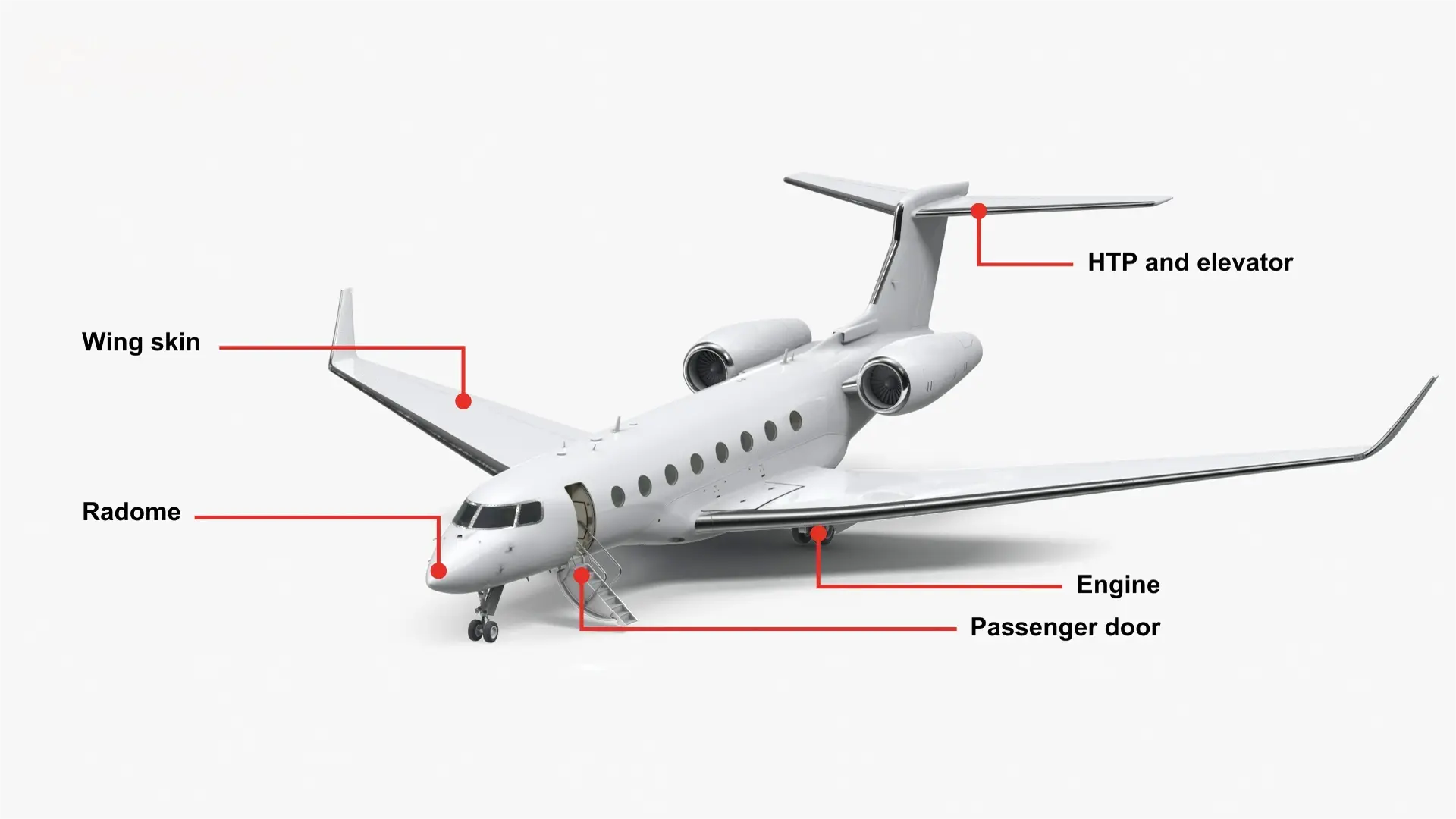
In the field of aviation manufacturing, the demand for lightweight and high-strength composite materials has led to extreme requirements for bonding technology. Traditional adhesives are prone to interface peeling, aging failure and other problems under extreme temperatures, dynamic loads or high humidity environments. Aerospace-grade Adhesive Resin has become a core material for the production of aircraft structures, spacecraft components and drones with its excellent weather resistance, mechanical properties and process adaptability, driving the industry towards a more efficient and safer direction.
What is Aerospace-grade Adhesive Resin?
Aerospace-grade Adhesive Resin is a high-performance adhesive resin designed for the aviation field. Its core features include:
Tolerance to extreme environments: The operating temperature range covers -60°C to 300°C, adapting to high-altitude low temperatures and engine high temperature environments;
High-strength interface bonding: Shear strength ≥30MPa, peel strength ≥8kN/m, meeting the heterogeneous material bonding requirements of CFRP (carbon fiber reinforced plastic) and titanium alloy;
Lightweight compatibility: Density as low as 1.2g/cm³, reducing the weight of aircraft structures;
Fatigue and impact resistance: Passed ASTM D3166 standard test, performance degradation under cyclic load <5%
Why choose our Aerospace-grade Adhesive Resin? Five major technical advantages
1. Super heat resistance and chemical stability
Using silicone-epoxy hybrid technology, the product still maintains more than 90% bonding strength after being soaked in aviation fuel, hydraulic oil and deicing agent, suitable for wing fuel tank sealing and engine component protection.
2. Fast curing and process simplification
Dual curing mechanism: UV pre-curing + thermal curing, initial positioning completed within 60 seconds, full strength reached in 2 hours;
Low volatility design: VOC content <50ppm, in line with Boeing BMS 5-129 and Airbus AIMS 05-01-005 standards, to ensure the safety of the production environment.
3. Precise adaptation to complex substrates
Surface energy regulation technology: can bond low surface energy materials (such as PTFE coating, polyimide film);
Stress buffer layer design: reduce the interface stress caused by the difference in thermal expansion coefficient and improve the durability of carbon fiber-aluminum composite structure.
4. Environmental compliance throughout the entire life cycle
Passed EU REACH, RoHS and NADCAP certification;
Bio-based derivative resin (biocarbon content ≥ 40%) is optional to help the aviation industry achieve its 2050 carbon neutrality goal.
Application scenarios: from fuselage manufacturing to satellite components
Aircraft main structure bonding: wing skin-truss bonding, door sealing, meeting FAA 25.853 fire protection standards;
Spacecraft thermal protection system: high-temperature bonding of ceramic-based composite materials and metal frames, excellent thermal shock resistance;
UAV lightweight design: rapid assembly of carbon fiber fuselages, improved endurance and load capacity;
Electronic equipment packaging: radar cover wave-transparent bonding, stable dielectric constant (ε<3.0)
Aerospace-grade Adhesive Resin is not only a breakthrough in materials science, but also the cornerstone of the intelligent and green transformation of the aviation industry. U-Sunny will continue to deepen its presence in the field of high-performance resins and provide more reliable and efficient bonding solutions to global customers.