


In the fields of consumer electronics, automotive displays, and precision optics, anti-reflection film UV resin has emerged as a critical material for reducing light reflection and enhancing visual clarity. This article explores the technical advancements of UV-curable resins, with a focus on Shenzhen U-Sunny's LM-501 low-refractive-index monomer, and analyzes its industry applications and future trends.
1. Technical Advantages of LM-501 Low-Refractive-Index Monomer
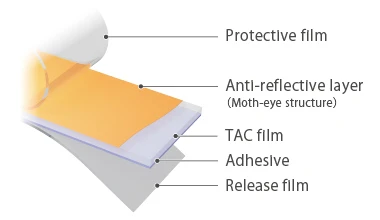
The LM-501 monomer developed by U-Sunny features a refractive index of 1.42–1.45, achieved through fluorinated acrylate molecular design. This ultra-low refractive index minimizes interfacial light scattering, enabling anti-reflection films to achieve >97% transmittance in the visible spectrum (400–700 nm). Compared to conventional resins (e.g., PET or TAC-based films), LM-501's low viscosity (≤200 cP) ensures excellent wetting and leveling properties, critical for uniform coatings on curved or micro-structured surfaces such as AR/VR lenses and smartphone screens.
Additionally, LM-501's single-functional UV-curable structure reduces crosslinking shrinkage (<1.5%) and enhances adhesion to diverse substrates, including polycarbonate and glass. Its solvent-free formulation complies with RoHS standards, aligning with global demands for eco-friendly manufacturing processes.
2. Applications in Anti-Reflection Film Manufacturing
Consumer Electronics: LM-501-based coatings are widely used in smartphone displays and tablet screens to suppress glare under bright environments. For instance, U-Sunny's resin enables <1% surface reflectivity, improving outdoor readability and color contrast.
Automotive Displays: The resin's high heat resistance (up to 150°C) and humidity stability make it ideal for in-car touchscreens, ensuring durability in extreme temperatures.
Optical Lenses: Paired with nanoimprinting technology, LM-501 facilitates the production of ultra-thin anti-reflection films for camera lenses and AR glasses, reducing lens thickness by 30% compared to traditional coatings.
3. Future Trends and Technological Innovations
The demand for anti-reflection film UV resin is evolving toward multifunctional integration and flexible compatibility. U-Sunny is advancing LM-501's capabilities in two key directions:
Flexible Displays: Modifying the monomer's molecular flexibility to support foldable OLED screens, addressing challenges in bendable coatings without cracking.
Smart Surface Properties: Incorporating nanoparticles (e.g., SiO₂) to add anti-fingerprint and anti-static functionalities, meeting premium electronic device requirements.
Furthermore, collaborations with equipment manufacturers (e.g., automated coating systems) are optimizing LM-501's compatibility with high-speed production lines, achieving coating thickness tolerances of <0.1 μm.
Conclusion
Anti-reflection film UV resin, exemplified by U-Sunny's LM-501, is driving advancements in optical clarity and energy efficiency across industries. With its low refractive index, environmental compliance, and adaptability to next-gen technologies, LM-501 sets a benchmark for high-performance coatings. As augmented reality and green manufacturing gain momentum, innovation in UV resin formulations will remain pivotal to meeting global market demands.