


In the field of optics and materials science, anti-reflective coating is a key technology to improve light transmittance and eliminate harmful reflections. The light transmittance of ordinary glass usually hovers around 90%, and even ultra-white glass can only reach 91%.
The advanced anti-reflective coating based on nano-zirconia can increase the light transmittance to more than 95%. Its core secret lies in the use of nano-structure design and precise control of refractive index to achieve maximum light transmission.
The core principle of anti-reflective coating
Anti-reflective coating uses the principle of light wave interference destructive to offset reflected light by constructing special thin films or nanostructures on the surface of the substrate. According to design requirements, it can be divided into single-layer coating, multi-layer coating and gradient refractive index coating.
Among them, the gradient refractive index structure (such as the "moth eye structure") can achieve a smooth transition of the refractive index from air to the substrate, and exhibits excellent anti-reflective performance under wide band and wide viewing angle conditions.
Nano-zirconia has become an ideal material for constructing such coatings due to its controllable refractive index, high hardness and excellent chemical stability, especially suitable for high-durability and high-demand application scenarios.
N-1715 nano-zirconia: high-performance substrate for anti-reflective coatings
Shenzhen U-Sunny's N-1715 nano-zirconia powder has the characteristics of small particle size (nanoscale), uniform distribution, and no hard agglomeration, laying the foundation for its application in functional coatings. This material has the following outstanding advantages:
Excellent optical performance: Through surface treatment and dispersion process, the refractive index of the coating can be precisely controlled, and it can be adapted to various substrates such as glass, plastic, and metal to achieve ultra-low reflectivity;
Strong physical properties: high temperature resistance, acid and alkali resistance, and wear resistance, giving the coating long-term stability in harsh environments;
Wide dispersion compatibility: Applicable to water-based/oil-based systems, it is well compatible with resins and solvents, and is easy to integrate into product systems such as inks, coatings, and adhesives.
Analysis of multiple application scenarios
1. High-transmittance optical coating
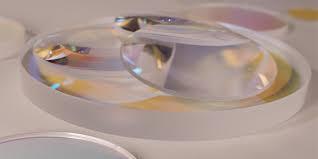
In photovoltaic glass, optical lenses, and display screen protective layers, N-1715 nano-zirconia coating can significantly improve light transmittance (up to more than 95%), reduce light loss and suppress glare, and improve device energy efficiency and visual clarity.
Combined with the easy-to-clean surface function, it can further extend the efficient operation cycle of outdoor equipment (such as solar panels).
2. Functional inks and coatings
Ink coatings with N-1715 can form a dense anti-reflective film layer, which is used in high-end packaging printing, anti-counterfeiting labels and other scenarios to improve color saturation and surface texture.
In architectural glass coatings, high light transmittance and low light pollution characteristics can be achieved simultaneously, helping to create an "invisible" energy-saving curtain wall.
3. High-performance adhesives
Introducing nano-zirconia in optical adhesives (OCA) and electronic packaging adhesives can optimize interface refractive index matching, reduce interface reflection loss, and enhance the mechanical strength and weather resistance of the adhesive layer. It is suitable for precision fields such as display module bonding and fiber coupling.
4. High-temperature functional coatings
Based on the inherent properties of zirconium oxide (such as low thermal conductivity and high melting point), N-1715 can be integrated into thermal barrier coating systems and used in high-temperature components such as aircraft engines and automobile cylinders to reduce thermal radiation losses while providing insulation.
The future technical direction will focus on the intelligent design of nano-zirconia coatings - by regulating the crystal phase (such as tetragonal phase/monoclinic phase), doping rare earth elements (such as yttrium oxide) or building a core-shell structure, a "super-surface" coating with a smoother refractive index gradient and a wider spectral response can be achieved.
Shenzhen U-Sunny's N-1715 nano-zirconia is promoting the performance leap of coating technology in multiple fields with material-level innovation.