


The global chemical industry is undergoing a transformative shift toward sustainability, with bio-based adhesive monomers emerging as a cornerstone of this evolution. As industries like coatings, inks, and adhesives seek eco-friendly alternatives to petroleum-based products, bio-based monomers like Shenzhen U-Sunny's AM-319 are leading the charge. This article explores the technical advancements, applications, and environmental benefits of bio-based adhesive monomers, with a focus on U-Sunny's innovative AM-318.
The Rise of Bio-Based Adhesive Monomers
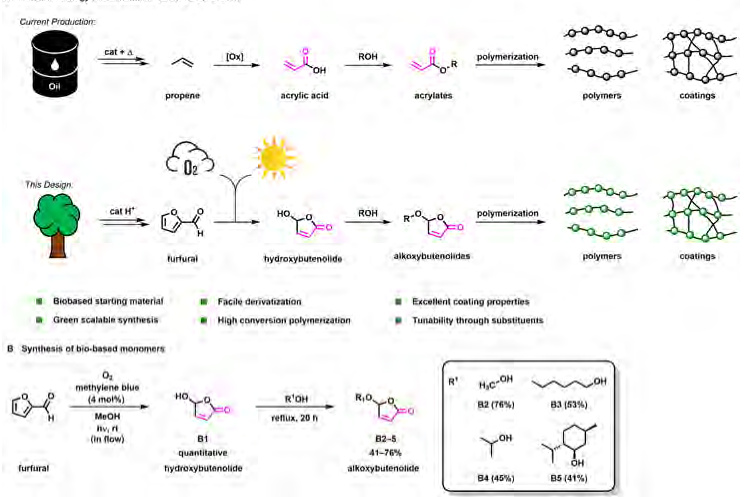
Bio-based adhesive monomers are derived from renewable resources such as plant oils, starches, and biomass. Unlike traditional petroleum-based counterparts, they offer a reduced carbon footprint, lower toxicity, and novel molecular architectures that enhance material performance (#user-content-ref-1). For instance, bio-based monomers like soybean oil derivatives or furfural-based compounds enable adhesives with superior bonding strength, flexibility, and biodegradability.
The global demand for bio-based materials is surging, driven by stringent environmental regulations and consumer preferences for green products. The EU's Industrial Biotechnology Vision Plan predicts that bio-based materials will replace 6–12% of chemical feedstocks by 2030, while China's bio-based polymer market is projected to grow at a CAGR of 18.5% through 2026.
Applications Across Industries
Adhesives & Sealants
Bio-based monomers are revolutionizing pressure-sensitive adhesives (PSAs) used in packaging, automotive assembly, and construction. For example, bio-based polyesters and acrylics provide excellent adhesion to diverse substrates like metals, plastics, and composites while supporting circular economy principles.
Coatings & Inks
Companies like AkzoNobel and BASF are developing bio-based acrylic monomers for UV-curable coatings. These materials reduce reliance on fossil fuels and enable functionalities like controlled release of active ingredients or enhanced weather resistance .
3. Automotive & Electronics
In electric vehicles (EVs), bio-based adhesives reduce vehicle weight, improving energy efficiency. Shenzhen U-Sunny's AM-319, a high-performance UV-curable monomer, is optimized for bonding lightweight materials like carbon fiber and aluminum, critical for EV battery systems and sensor components.
U-Sunny's AM-319: A Breakthrough in Bio-Based Technology
Shenzhen U-Sunny's AM-319 exemplifies the synergy between sustainability and performance. This optical-grade acrylate monomer is designed for high-precision applications in adhesives and coatings. Key features include:
Rapid UV Curing: Achieves full curing in <30 seconds under 365nm UV light, enhancing production efficiency.
Thermal Stability: Withstands temperatures up to 200°C, ideal for automotive and aerospace environments.
Low Shrinkage (<3%): Ensures dimensional stability in micro-optical components and flexible displays.
Bio-Based Content: Derived from renewable raw materials, aligning with ISO 16620 and REACH standards.
AM-319 is widely used in AR/VR lenses, 5G optical modules, and foldable OLED screens, where its high refractive index (>1.65) and chemical inertness deliver unmatched durability.
Environmental Compliance & Market Leadership
U-Sunny's AM-319 meets rigorous environmental certifications, including RoHS and REACH, and supports low-VOC formulations. The product's lifecycle-from bio-based feedstock sourcing to energy-efficient production-reduces carbon emissions by 15–20% compared to conventional monomers
.
In the competitive landscape, AM-319 outperforms alternatives like BASF's bio-based 2-octyl acrylate and Evonik's THFMA, offering a unique balance of cost-effectiveness (5–8% lower material usage) and technical versatility .
Conclusion
As industries prioritize sustainability, bio-based adhesive monomers like U-Sunny's AM-319 are redefining material science. By combining renewable sourcing, advanced performance, and regulatory compliance, AM-319 positions Shenzhen U-Sunny as a leader in the green chemistry revolution. For manufacturers seeking to reduce environmental impact without compromising quality, AM-319 offers a proven, future-ready solution.