


With the rapid development of UV curing technology, cationic-free radical hybrid UV resin has become a popular material in the industrial and consumer fields due to its unique dual curing mechanism. This article will deeply explore its core technology, application scenarios and market trends, and combine the innovative products of Shenzhen U-Sunny to provide selection reference for industry users.
1. What is cationic-free radical hybrid UV resin?
This resin combines the dual advantages of free radical polymerization (fast curing, high reactivity) and cationic polymerization (deep curing, low shrinkage). By adding a photoinitiator (such as U-Sunny's Uyracure series), two reactions are triggered simultaneously under UV light, significantly improving the mechanical strength and stability of the material. Studies have shown that the optimized hybrid resin can achieve a tensile strength of 36.89 MPa and a volume shrinkage of only 2.89%, making it suitable for high-precision 3D printing, electronic packaging and other scenarios
2. Core technology advantages and innovative breakthroughs
Dual curing mechanism:
Free radical polymerization: rapid surface curing, shortened production cycle (such as 3D printing first layer exposure time can be controlled within a few seconds).
Cationic polymerization: ensure deep curing, reduce shrinkage and deformation, suitable for thick coatings (such as Solarez Thick UV resin can make spheres over 5mm).
Balance between environmental protection and performance:
Shenzhen Youyang's UV prepolymer resin achieves "self-wetting" function through molecular structure optimization, reduces wetting agent dependence, and meets low VOCs emission requirements.
U-Sunny's LED low-energy curing technology can reduce energy consumption while ensuring rapid curing and high adhesion of products such as nail polish.
Material modification potential:
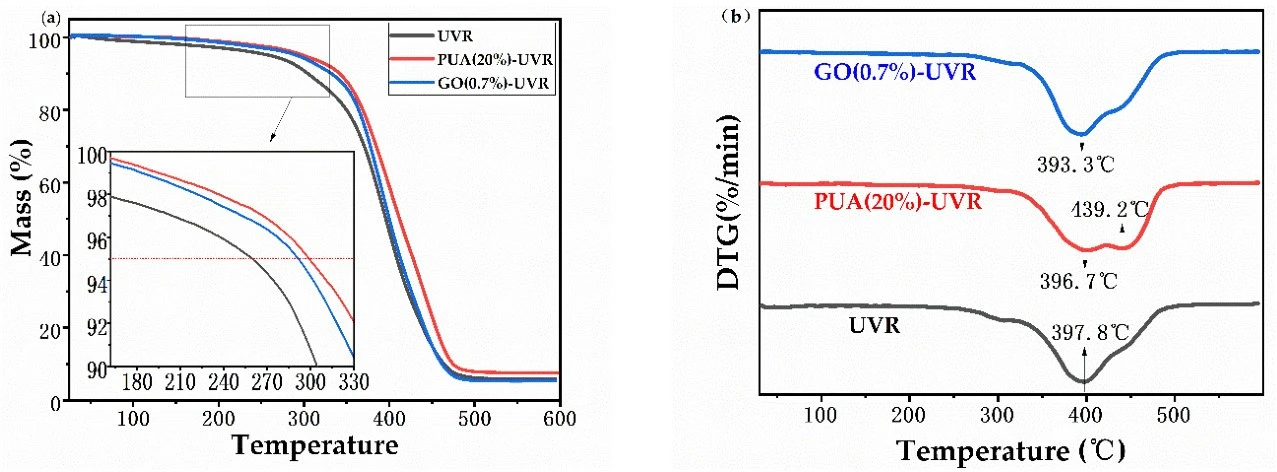
Adding graphene oxide (0.7%) can enhance the hydrophobicity and thermal stability of the resin.
The introduction of polyurethane acrylate (20%) significantly improves flexibility and impact resistance.
3. Typical application scenarios and cases
3D printing and industrial parts:
Standard Resin is suitable for automotive prototypes and precision mold manufacturing due to its low shrinkage (<3%) and high hardness (80-85 Shore D).
Coating and ink printing:
Epoxy-modified polyester resin from Shenzhen Youyang achieves high color saturation and fast drying in packaging printing, reducing the use of solvents.
U-Sunny's UV nail polish formula (such as Trust 7010 resin) is cured by low-energy LEDs to meet the dual needs of safety and gloss in the nail industry.
Electronic packaging and optical materials:
Cationic curing mechanism can avoid the oxygen inhibition problem of traditional free radical resins and is suitable for transparent device packaging such as optical lenses.
4. Market trends and Shenzhen U-Sunny's innovative solutions
As environmental regulations become stricter (such as the EU REACH standard), the demand for low-energy, high-functionality hybrid UV resins has surged. The UV prepolymer resin series launched by Shenzhen U-Sunny has been successfully applied to steel structure corrosion protection and new energy vehicle coatings through water-based and self-flame retardant modification. U-Sunny's UV resin has become an ideal choice for outdoor electronic devices with its styrene-free formula and excellent chemical resistance.
With years of technological accumulation, Shenzhen Youyang and U-Sunny can provide full-chain solutions from resin synthesis to application technology, helping companies seize market opportunities.