


Driven by the demand for environmentally friendly manufacturing and efficient production, cationic photoinitiator sensitizers, as key components of photocuring systems, are accelerating the green transformation of industries such as coatings, inks, and adhesives. This article analyzes its technical principles and application value, and focuses on the innovative characteristics and industry practices of U-Sunny PAS-50 photosensitizer.
1. Technical principle of cationic photoinitiator sensitizer
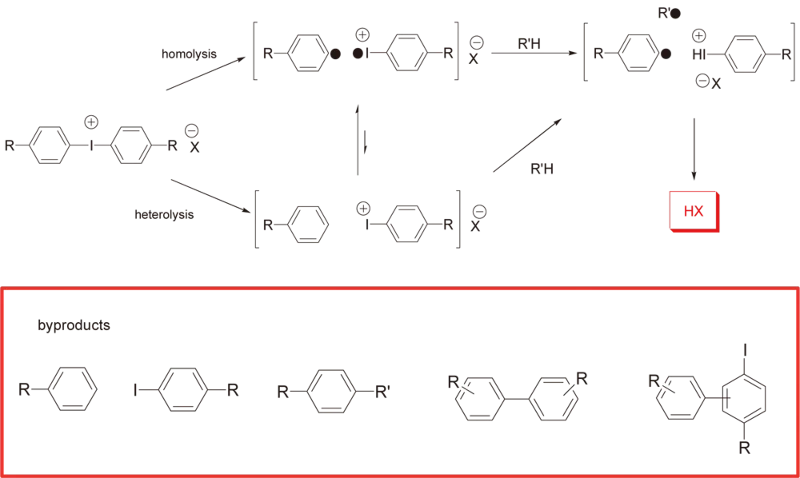
Cationic photocuring system generates strong acid (H⁺) by absorbing ultraviolet light through photoinitiators (such as iodonium salts and sulfonium salts), triggering the cationic polymerization reaction of epoxy resin or vinyl ether monomers. The sensitizer improves efficiency through the following mechanisms in this process:
Broaden the spectral response: The absorption peak of traditional iodonium salts is mostly located at short wavelengths (<300nm), and sensitizers (such as anthracene derivatives) can extend their absorption range to long wavelengths (such as 365-405nm), adapt to UV LED light sources, and reduce energy consumption.
Improve quantum yield: The sensitizer efficiently transfers light energy to the photoinitiator through the energy transfer mechanism, which increases the curing speed by more than 30% and reduces the residual unreacted monomers.
Inhibit side reactions: Optimize the acid generation path, reduce yellowing byproducts, and are suitable for white coatings and highly transparent inks.
2. Multi-field application scenarios
1. Environmentally friendly coatings and industrial coatings
Due to its oxygen-free inhibition characteristics, the cationic system can achieve uniform curing of thick coatings (>500μm). For example, automotive metal primers use epoxy resins and U-Sunny PAS-50 sensitizers, with salt spray resistance of 1000 hours and VOC emissions reduced by 90%. In wood coatings, UV systems containing cellulose nanocrystals can simultaneously improve hardness (2H→4H) and wear resistance (wear loss <10mg/1000 turns).
2. Functional inks and printed electronics
In the field of printed electronics, cationic conductive inks are added with silver nanowires (diameter 20nm) and sensitizers to achieve a resistivity as low as 5×10⁻⁵ Ω·cm, and the conductivity retention rate is >95% after 200 bends. Anti-counterfeiting inks combine thermosensitive microcapsules (response temperature 30-50℃) with photocuring technology to achieve multiple dynamic encryption effects.
3. High-performance adhesives and packaging materials
UV adhesives for electronic packaging need to be resistant to high temperature and high humidity environments. The cationic system containing PAS-50 has a shear strength retention rate of over 80% under 85℃/85% RH conditions, and the curing time is shortened to less than 3 seconds, which is suitable for 5G base station component packaging. In addition, the degradable cationic adhesive can quickly dissolve in an acidic environment of pH=2 by introducing dynamic acetal bonds, meeting the recycling needs of electronic components.
3. U-Sunny PAS-50: Industry benchmark sensitizer solution
As the core material of the cationic light curing system, U-Sunny PAS-50 photosensitizer has the following breakthrough advantages:
Broad spectrum and high efficiency: compatible with 365-405nm UV LED light source, the light response efficiency is 40% higher than that of traditional materials, and supports 10cm deep curing;
Strong weather resistance: high temperature resistance up to 200℃, suitable for automotive engine compartment coating and LED lens packaging;
Environmental protection and safety: does not contain halogens and heavy metals, passed FDA food contact certification, and can be used for food packaging inks;
Functions can be customized: compatible with fillers such as carbon fiber and boron nitride, and develop thermal conductive (1.5W/m·K) or electromagnetic shielding (>30dB) composite materials.
4. Future trends and challenges
With the advancement of the European Green New Deal, the coordinated research and development of bio-based cationic resins (such as itaconate derivatives) and sensitizers has become a focus. However, how to balance cost and performance and develop a longer-lasting light source-material matching solution is still an industry pain point.
Conclusion
Cationic photoinitiators and sensitizers are reshaping the boundaries of photocuring technology through material innovation. The application of high-performance products such as U-Sunny PAS-50 provides efficient and environmentally friendly solutions for the coatings, inks and adhesives industries. In the future, with the deep integration of smart materials and low-carbon manufacturing, this technology will open up broader application prospects in new energy, biomedicine and other fields.