


In the field of high-end metal surface treatment such as automobile grilles, bathroom hardware, and electronic decorative parts, electroplated chrome is favored for its mirror gloss and wear resistance. However, the traditional hexavalent chromium electroplating process faces fatal pain points: highly toxic pollution (hexavalent chromium is carcinogenic), high energy consumption (multiple copper-nickel primers are required), and poor coverage of complex parts. With the tightening of global environmental regulations (such as the EU ELV Directive), UV electroplating primers that combine environmental protection and performance are becoming the core breakthrough for industrial upgrading.
1. The dilemma of traditional electroplating chromium and the innovative value of UV primer
Pain points of traditional processes
Environmental pollution: Hexavalent chromium electroplating produces chromium-containing wastewater/waste gas, and the treatment cost accounts for 30% of the total production cost
Complex process: substrate → degreasing → pickling → copper plating → nickel plating → chromium plating (6-8 processes)
Limitations: Uneven plating of deep holes/complex structural parts, insufficient bonding and easy blistering
Subversive advantages of UV electroplating primer
✅ Environmental revolution: zero hexavalent chromium emissions, VOC <50g/L (90% lower than solvent-based primer)
✅ Simplified process: substrate → UV primer → vacuum aluminum/chrome plating → UV topcoat (3-4 processes)
✅ Performance breakthrough: 5B grade adhesion to ABS/PC/metal, salt spray resistance >500h
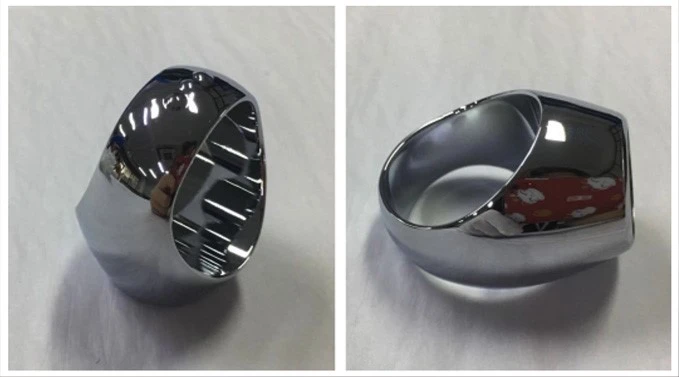
2. T-7128 resin: high-performance engine of electroplating UV primer
Shenzhen U-Sunny's T-7128 electroplating special UV resin overcomes three major technical barriers through molecular design:
1. Extreme adhesion structure
Bipolar groups: carboxyl (-COOH) forms a coordination bond with the metal substrate, and epoxy (-O-) anchors the coating
Measured data:
Adhesion to aluminum alloy: 5B (ISO 2409)
Adhesion to PC/ABS: 4B (after boiling in water for 1h)
2. Balance between leveling and hiding
Low viscosity and high leveling: 25℃ viscosity 800-1200cps, film thickness 5μm can cover substrate defects
Metal texture enhancement: light transmittance > 95%, increase the reflectivity of vacuum aluminum coating to 92% (comparable to real chrome plating)
3. Application scenarios: Full-field solutions from bathroom to automobile
(1) Bathroom hardware
Process: ABS substrate → T-7128 primer (5μm) → vacuum aluminum plating → UV topcoat
Performance: Passed 100℃ hot water cycle test 500 times without cracking
(2) Automobile decoration parts
Innovative design: T-7128 primer with 0.5% nano-silicon dioxide added, hardness reaches 3H
Weather resistance: ΔE<1.5 after QUV aging for 1000h (far better than the industry ΔE<3 standard)
(3) Consumer electronics
Precision electroplating: used for TWS headset charging case logo electroplating, film thickness accuracy ±0.3μm
Electromagnetic shielding: primer layer compounded with conductive carbon black, surface resistance <1Ω/sq
4. Technology Frontier: Green Evolution of UV Electroplating Primer
1. Nano-enhancement Technology
Adding 2% zirconium oxide nanoparticles: hardness increased from 2H to 4H, wear resistance increased by 300%
Compounded with graphene: thermal conductivity > 5 W/mK (solves the heat dissipation problem of LED logo)
2. Water-based UV composite system
T-7128 water-based version: VOC approaches 0, passed the German Blue Angel certification
Case: Application of bumper trim strips of a European car company, production line transformation costs reduced by 60%
3. Intelligent coating
Cooperating with 3D visual positioning robot: complex curved surface spray film thickness difference < ±0.5μm
Online UV curing: conveyor belt speed can reach 8m/min
Upgrade your electroplating process now!
🔥 Shenzhen U-Sunny provides T-7128 resin samples and electroplating process packages (including primer formula + vacuum plating parameters)