


Digital light processing (DLP) 3D printing technology has set off a material revolution in the fields of industrial manufacturing, biomedicine, electronic equipment, etc., with its high precision and high efficiency. Among them, photosensitive resin, as a core raw material, has been widely used in the manufacture of coatings, inks, adhesives and composite materials through formula optimization and functional combination. This article will deeply explore the technical advantages and application scenarios of DLP photosensitive resin, and focus on the innovative features of the U-Sunny PAS-50 product.
1. Technical advantages of DLP photosensitive resin
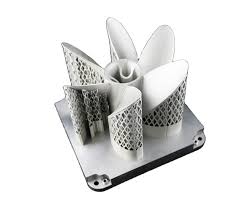
DLP technology uses ultraviolet light to cure liquid resin layer by layer, which can quickly form complex structures with a resolution of up to micron level, and is particularly suitable for manufacturing high-precision molds, microfluidic devices and bionic structures. The formulation design of photosensitive resin directly affects the mechanical properties and functionality of printed parts. For example, adding carbon fiber (15% mass fraction) can significantly improve the tensile strength, while balancing the molding accuracy and process parameters (such as exposure time of 3 seconds and layer thickness of 0.04 mm). In addition, the introduction of nano-alumina particles can optimize the molding error (0.19 mm) and tensile strength (59.37 MPa) of the resin, which is suitable for precision industrial parts.
2. Multi-field application scenarios
Functional coatings and inks
Photosensitive resins can be used to develop smart coatings and anti-counterfeiting inks by adding thermochromic microcapsules or conductive fillers. For example, castor oil-based resins combined with dynamic covalent bonding technology can achieve the recycling of photocurable materials, and after degradation, they can be converted back into liquid resins for multiple printing of temperature-sensitive patterns and information encryption.
High-performance adhesives and composite materials
DLP-printed resin-based composite materials (such as carbon fiber reinforced PPA) have high strength (118 MPa) and high temperature resistance (197°C), which are suitable for welding fixture manufacturing, and the cost is 70% lower than that of traditional metal solutions. The plastic-metal hybrid printing technology (MM-DLP3DP) developed by the Japanese research team can accurately deposit metal circuits (resolution 40 μm) on the inner and outer surfaces of resin parts, providing integrated solutions for wearable devices and sensors.
Biomedical and environmentally friendly materials
Degradable bioresins combined with volumetric 3D printing technology can manufacture bone cartilage scaffolds with gradient pore structures to promote tissue regeneration. A team from Harvard University used deep-penetration acoustic printing to achieve rapid prototyping of centimeter-scale biological tissues, providing a new path for clinical repair.
Innovative photosensitive photosensitizer solution
As a benchmark product in the DLP field, U-Sunny PAS-50 photosensitizer is designed for industrial applications and has the following features:
High precision and weather resistance: supports ±0.05 mm accuracy, heat deformation temperature up to 180°C, suitable for automotive molds and electronic packaging;
Multifunctional composite materials: compatible with reinforcing materials such as carbon fiber and glass fiber, and can be customized with conductive or antibacterial functions;
Environmentally friendly and sustainable: using dynamic bonding technology, waste parts can be degraded and recycled, reducing 75% of resource waste.
4. Future Trends and Challenges
As volumetric 3D printing technology matures, the layerless manufacturing model will further improve efficiency (completing centimeter-level parts within 10 seconds). However, material compatibility (such as composite printing of metals and ceramics) and large-scale production costs still need to be broken through.
Conclusion
The diverse applications of DLP photosensitive resins are reshaping the manufacturing landscape. From the industrial adaptability of U-Sunny PAS-50 to the environmental breakthrough of biodegradable resins, technological innovation continues to drive the industry towards efficient, intelligent and sustainable development. For more product details or technical cases, please refer to relevant research literature and industry reports.