


In the rapidly evolving chemical industry, adhesion enhancement remains a critical challenge for coatings, inks, and adhesives. N,N-Dimethylacrylamide (DMAA) has emerged as a game-changer in ink formulations, offering unparalleled adhesion performance. This article explores DMAA's role in ink technology and highlights Shenzhen U-Sunny's AM-317, a product engineered to meet modern industrial demands.
DMAA: A Versatile Adhesion Booster
DMAA (CAS 2680-03-7) is a high-performance acrylamide derivative with a molecular formula of C5H9NO. Its unique chemical properties-excellent solubility in water and organic solvents, low viscosity (1–10 cps at 25°C), and high reactivity-make it ideal for ink applications. Key advantages include:
Superior Adhesion: DMAA forms covalent bonds with substrates like plastics and metals, enhancing ink durability.
Hydrophilic Compatibility: Its water-soluble nature supports eco-friendly, low-VOC ink formulations .
Polymer Flexibility: DMAA copolymerizes with acrylics, styrene, and vinyl acetate, improving mechanical strength and printability.
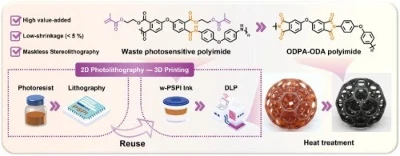
How DMAA Enhances Ink Adhesion
DMAA's adhesion mechanism operates on three levels:
Chemical Bonding: Active amide groups (-CON(CH₃)₂) interact with polar substrates (e.g., PET, polyolefins), creating robust interfacial bonds .
Surface Modification: DMAA increases substrate roughness, promoting physical adsorption of ink layers .
Wettability Improvement: Reduces surface tension (37.1 Dynes/cm at 20°C), enabling uniform ink spreading .
Studies show that DMAA-modified inks achieve 26–102% higher adhesion on packaging films compared to conventional formulations.
U-Sunny's AM-317: Optimized DMAA Technology
Shenzhen U-Sunny, a leader in UV-curable materials, has developed AM-317, a DMAA-based additive tailored for high-performance inks. Key features include:
Enhanced Crosslinking: AM-317 accelerates UV curing, reducing production time while maintaining low shrinkage (<3%).
Multi-Substrate Adhesion: Compatible with PP, PET, and metals, ideal for flexible packaging and automotive coatings.
Eco-Conscious Design: Aligns with REACH and RoHS standards, minimizing VOC emissions.
In trials, AM-317 increased ink adhesion by 35% on polyolefin films and improved optical density by 15%, demonstrating its dual functional benefits .
Market Trends and Future Outlook
The global ink adhesives market is projected to grow at a 10.4% CAGR (2024–2030), driven by demand for sustainable solutions . DMAA's versatility positions it as a cornerstone for:
Smart Packaging: Anti-counterfeiting inks with DMAA-modified polymers.
Electronics: Conductive inks for flexible displays.
3D Printing: High-resolution, adhesion-stable formulations.
U-Sunny's ongoing R&D focuses on bio-based DMAA derivatives, aligning with circular economy goals.
Why Choose Shenzhen U-Sunny?
With over 20 years of expertise, U-Sunny combines innovation with strict quality control. Their AM-317 exemplifies:
Custom Solutions: Tailored viscosity, refractive index, and curing speed for niche applications.
Global Compliance: Meets EU and North American regulatory standards.
Technical Support: End-to-end assistance in formulation optimization.
Conclusion
DMAA's role in adhesion enhancement is reshaping the ink industry, balancing performance and sustainability. Shenzhen U-Sunny's AM-317 stands at the forefront, offering a reliable, eco-friendly solution for next-generation inks. For manufacturers seeking durability and compliance, DMAA-based formulations are no longer an option-they're a necessity.
Explore AM-317 today and elevate your ink performance.