


In the rapidly evolving industrial coatings sector, nanofiller stabilizers have emerged as critical components for improving material performance, durability, and sustainability. These advanced additives optimize the dispersion of nanoparticles like silica, calcium carbonate, or metal-organic frameworks (MOFs) within coatings, ensuring stability and enhancing functional properties such as corrosion resistance, UV protection, and mechanical strength. This article explores the role of nanofiller stabilizers in industrial coatings, highlights cutting-edge solutions like U-Sunny's Elite-601 Wetting and Dispersing Agent, and analyzes market trends driving innovation.
Key Mechanisms of Nanofiller Stabilizers
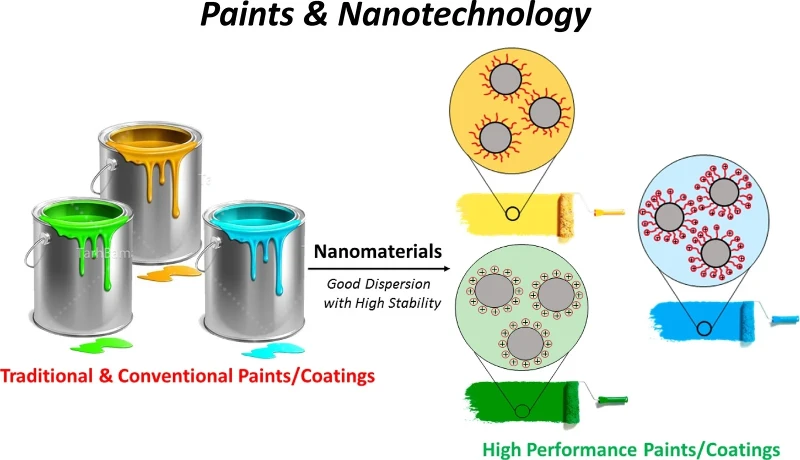
Nanofiller stabilizers prevent particle aggregation and ensure uniform distribution of nanomaterials in coatings. They are categorized into three types based on their stabilization mechanisms:
Steric Stabilizers: Polymers or non-ionic surfactants (e.g., Pluronic F-127) form a physical barrier around particles, reducing direct contact and aggregation.
Electrostatic Stabilizers: Ionic surfactants like sodium dodecyl sulfate (SDS) create repulsive charges on particle surfaces, enhancing colloidal stability.
Electrosteric Stabilizers: Hybrid systems combining steric and electrostatic effects for optimal dispersion.
The ratio of stabilizer to nanofiller is critical-insufficient amounts lead to clumping, while excess stabilizers increase viscosity and hinder processing. For example, nano-calcium carbonate (CaCO3) requires precise stabilization to improve compatibility in PVC or polyurethane coatings, enhancing elasticity and reducing costs.
Case Study: U-Sunny's Elite-601 Wetting and Dispersing Agent
Shenzhen U-Sunny, a leader in UV-curing technologies, offers the Elite-601, a high-performance anionic surfactant designed for nanofiller stabilization. Key features include:
Eco-Friendly Formula: Free from APEO and foaming agents, with biodegradable properties.
Enhanced Dispersion: Reduces surface tension (43.98 mN/m) for uniform nanofiller integration in coatings.
Thermal Stability: Maintains efficacy even after prolonged storage at low temperatures (with pre-heating to 30–40°C).
This stabilizer is ideal for epoxy, polyurethane, and acrylic coatings, improving scratch resistance and adhesion in automotive or marine applications. Its compatibility with nanoparticles like silica or graphene ensures coatings meet stringent industrial standards while reducing VOC emissions.
Market Trends and Future Outlook
The global nanofiller stabilizer market is projected to grow at a CAGR of 22.7% by 2032, driven by demand in construction, automotive, and aerospace sectors. Key trends include:
Nano-Additive Integration: Silica and titanium dioxide nanoparticles enhance corrosion resistance and thermal stability in coatings.
Sustainability Focus: Low-VOC stabilizers like Elite-601 align with green manufacturing initiatives.
Advanced Composites: Carbon nanotubes and MOFs (e.g., ZIF-8) are revolutionizing anti-corrosion coatings for harsh environments.
In Asia-Pacific, rapid industrialization and infrastructure projects are accelerating adoption, while North America leads in R&D for high-performance coatings.
Conclusion
Nanofiller stabilizers are indispensable for next-generation industrial coatings, balancing performance with environmental compliance. Innovations like U-Sunny's Elite-601 exemplify how advanced stabilizers can optimize nanomaterial dispersion, reduce costs, and extend coating lifespans. As industries prioritize durability and sustainability, the role of nanofiller stabilizers will continue to expand, reshaping the future of protective and functional coatings.