


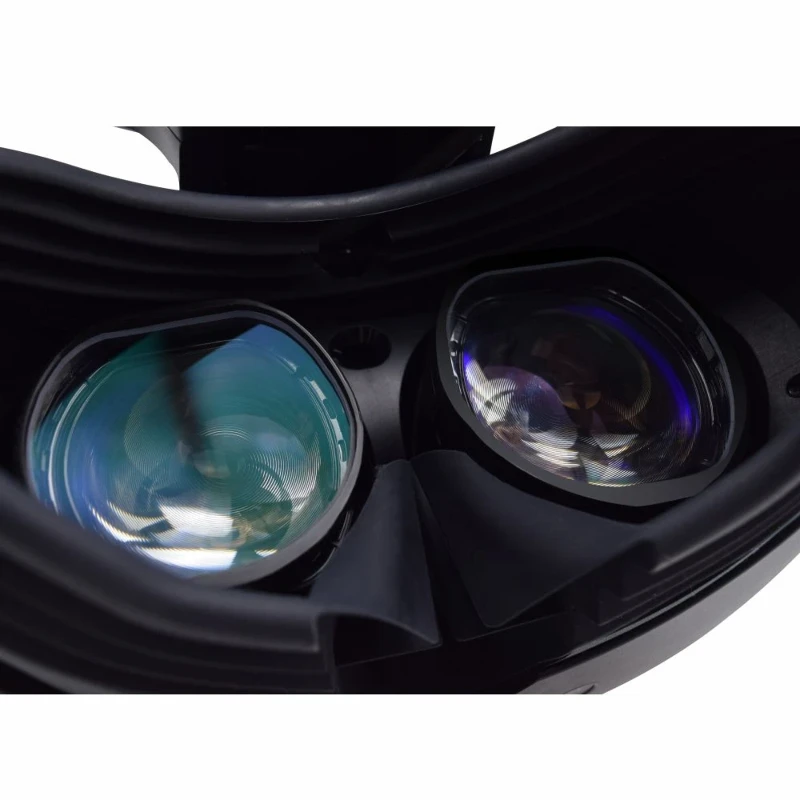
Virtual Reality (VR) lens coatings are critical for optimizing immersive experiences by minimizing glare, scratches, and environmental interference. As VR applications expand into gaming, healthcare, and industrial training, the demand for durable, high-performance coatings has surged. This article explores the innovations behind VR lens coatings, with a focus on U-Sunny's T-6135 fluorinated low-refractive-index UV resin, a breakthrough material redefining optical clarity and durability.
Core Technologies in VR Lens Coatings
Modern VR coatings integrate multiple functional layers:
Anti-Reflective (AR) Coatings: Reduce glare by 60–80%, enhancing contrast and color accuracy in dynamic environments (#user-content-footnote-1).
Anti-Scratch Layers: Protect lenses from abrasions caused by frequent use or accidental impacts (#user-content-footnote-2).
Anti-Fog & Oil-Resistant Coatings: Prevent condensation and smudges, ensuring uninterrupted visuals during extended sessions (#user-content-footnote-3).
These coatings rely on advanced polymers like fluorinated UV resins, which balance optical performance with mechanical resilience.
U-Sunny's T-6135: A Game-Changer for VR Optics
Shenzhen U-Sunny's T-6135 fluorinated UV resin stands out for its low refractive index (1.38–1.42) and exceptional adhesion to substrates like PET and TAC films. Key advantages include:
Enhanced Light Transmission: Minimizes light scattering, achieving >98% visible-light transmittance for crisper VR visuals (#user-content-footnote-4).
Rapid Curing: Compatible with LED UV systems, curing within 10 seconds to streamline production (#user-content-footnote-5).
Chemical Resistance: Withstands oils, sweat, and cleaning agents without degradation, ideal for high-wear scenarios (#user-content-footnote-6).
Technical specifications such as a viscosity of 15,000 mPa·s (25°C) and a glass transition temperature (Tg) of 35°C ensure flexibility and thermal stability, critical for VR headsets exposed to varying temperatures (#user-content-footnote-7).
Market Trends and Competitive Edge
The global VR optics market is projected to grow at a 28.8% CAGR through 2027, driven by demand for lightweight, high-definition lenses (#user-content-footnote-8). Traditional materials like PMMA and PC dominate, but fluorinated resins like T-6135 are gaining traction due to their low refractive index and compatibility with Pancake optical designs, which reduce device bulk while improving image quality (#user-content-footnote-9).
Compared to conventional coatings, T-6135 reduces VOC emissions by 50% (solvent-free formula) and supports sustainable manufacturing-a key differentiator in eco-conscious markets (#user-content-footnote-10).
Conclusion
For VR developers and manufacturers, adopting advanced coatings like U-Sunny's T-6135 resin is essential to meet rising consumer expectations for durability and visual fidelity. By integrating fluorinated polymers, brands can deliver lenses that are not only scratch-resistant and glare-free but also environmentally compliant.
Explore U-Sunny's T-6135 to elevate your VR optics-contact their team for tailored solutions aligning with next-gen VR/AR demands.