


In the realms of consumer electronics, automotive optics, and renewable energy, fluorinated acrylate UV resin has become indispensable for manufacturing high-performance anti-reflective coatings (ARCs). This article explores Shenzhen U-Sunny's T-6139 fluorinated low-refractive-index UV resin, detailing its technical innovations, applications, and alignment with global sustainability goals.
1. Technical Innovations of T-6139 Fluorinated UV Resin
U-Sunny's T-6139 resin leverages fluorinated acrylate chemistry to achieve a refractive index of 1.38–1.42, significantly reducing light reflection at material interfaces. Its molecular design integrates perfluorinated alkyl chains, which lower surface energy and enhance hydrophobicity, resulting in <1% surface reflectivity and >98% transmittance in the visible spectrum (400–700 nm). Unlike conventional ARCs, T-6139's UV-curable formulation ensures rapid curing (<5 seconds under UVLED systems), minimizing thermal stress on sensitive substrates like polycarbonate or PET films.
Key advantages include:
Ultra-low viscosity (150–250 cP): Enables uniform coating on micro-structured surfaces, critical for AR/VR lenses and precision optics.
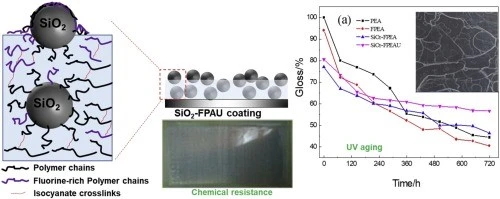
Enhanced durability: Nano-silica reinforcement improves abrasion resistance, maintaining >95% transmittance after 1,000 Taber cycles.
Eco-compliance: Solvent-free and halogen-free formulation meets RoHS and REACH standards, reducing VOC emissions by 50% compared to solvent-based alternatives.
2. Applications Transforming Industries
Consumer Electronics: T-6139-based coatings are widely used in smartphone displays and tablet screens to suppress glare, improving outdoor readability and reducing eye strain. Its fingerprint-resistant properties align with trends in high-end touchscreens.
Automotive Optics: The resin's thermal stability (up to 160°C) and humidity resistance make it ideal for car windows and heads-up displays (HUDs), ensuring clarity in extreme environments.
Solar Energy: Applied to photovoltaic panels, T-6139 increases light absorption by 8%, boosting energy conversion efficiency while resisting dust accumulation.
3. Competitive Edge Over Traditional ARCs
Traditional ARCs using materials like SiO₂ or MgF₂ often face challenges in adhesion and flexibility. T-6139 addresses these limitations through:
Chemical bonding: Silane coupling agents enhance adhesion to glass and polymers, achieving peel strength >5 N/cm.
Flexible compatibility: The resin's elongation at break (>80%) supports bendable displays and foldable devices, outperforming rigid inorganic coatings.
4. Future Trends and Sustainable Innovations
The demand for multifunctional ARCs is driving U-Sunny's R&D in:
Self-cleaning surfaces: Integrating TiO₂ nanoparticles for photocatalytic degradation of organic contaminants.
Smart optical tuning: Developing coatings with adjustable refractive indices via pH-responsive monomers.
Bio-based resins: Exploring plant-derived fluorinated acrylates to reduce reliance on petrochemicals.
Conclusion
Fluorinated acrylate UV resin, exemplified by U-Sunny's T-6139, is redefining anti-reflective coating technology. With its unparalleled optical performance, environmental compliance, and adaptability to next-gen applications, T-6139 sets a benchmark for innovation. As industries prioritize energy efficiency and user-centric design, advancements in UV-curable materials will remain pivotal to meeting global market demands.