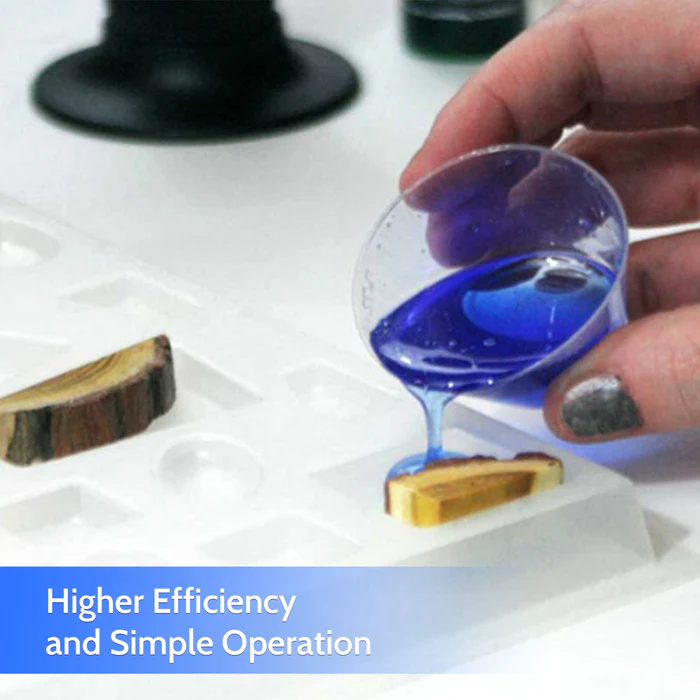
In the rapidly evolving field of optical manufacturing, high conversion UV resin has emerged as a game-changer, offering unmatched performance in applications ranging from optical lens bonding to 3D printing of precision components. This advanced material combines high refractive index, rapid curing, and exceptional durability, making it a top choice for industries demanding reliability and efficiency.
Why Choose High Conversion UV Resin?
Superior Optical Clarity & High Refractive Index
Designed for applications like optical lens adhesion and fiber coating, this UV resin achieves a refractive index of up to 1.65, ensuring minimal light scattering and maximized transmission efficiency. Its high transparency reduces post-processing needs, saving time and costs.
Rapid Curing & Enhanced Productivity
With curing times as fast as 3 seconds under UV light, manufacturers can significantly accelerate production cycles. This feature is critical for high-volume industries such as consumer electronics and automotive optics.
Robust Performance in Extreme Conditions
Tested to withstand temperatures from -40°C to 150°C, the resin maintains structural integrity even under thermal shock or high humidity. This makes it ideal for outdoor equipment, medical devices, and aerospace components.
Low Shrinkage & High Adhesion Strength
The material's minimal shrinkage (<1%) during curing ensures dimensional accuracy, while its strong bonding capability adapts to diverse substrates like glass, metals, and engineering plastics.
Key Applications Driving Innovation
Optical Lens Bonding: Ensures seamless adhesion for camera modules, microscopes, and AR/VR lenses, enhancing image clarity without distortion.
Fiber Optic Coating: Protects delicate fibers while maintaining signal integrity, critical for telecommunications and data centers.
3D-Printed Optical Components: Enables rapid prototyping of complex geometries with micron-level precision, reducing lead times by 50%
Industry Impact & Cost Efficiency
Adopting high conversion UV resin can reduce production costs by up to 30% compared to traditional epoxy resins. Case studies in automotive lighting systems show a 20% improvement in assembly line efficiency, while electronics manufacturers report fewer defects in miniaturized optical modules.
For tailored solutions or samples, visit www.uychem.com or contact our technical team at Email. Elevate your optical products with a material engineered for speed, precision, and durability.