


As a core component of display technology, Brightness Enhancement Film (BEF) significantly improves screen brightness and energy efficiency by optimizing the light utilization of the backlight system, and is widely used in LCD, Mini-LED and flexible display fields. The N-1715 nano zirconium oxide dispersion launched by Shenzhen U-Sunny has become a key material in BEF manufacturing due to its high refractive index (>1.9) and transparency (light transmittance>90%), helping the chemical, coating, ink and other industries achieve technological breakthroughs.
N-1715's process advantages: the core of BEF performance improvement
High refractive index and optical uniformity
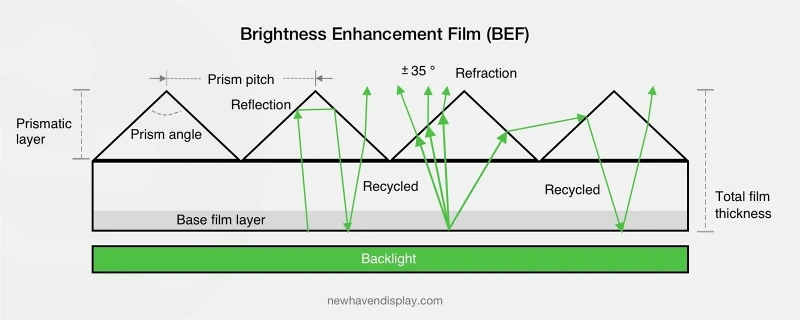
N-1715 adopts nano-zirconia dispersion technology, with precise particle size control (<50nm), which can significantly enhance the light refraction efficiency of the prism structure of BEF, increase the brightness of Mini-LED backlight by more than 30%, and reduce power consumption by 20%.
Weather resistance and stability
Through surface hydroxylation modification, N-1715 remains stable in high temperature and high humidity environments, avoiding cracking or atomization of the coating, and is suitable for vehicle-mounted displays and outdoor electronic devices.
Environmentally friendly process adaptability
As a water-based dispersion, N-1715 is compatible with polycarbonate (PC) and PET substrates, does not require the use of toxic solvents, complies with EU RoHS standards, and reduces VOC emissions in the production of coatings and adhesives.
Cross-industry applications: from optical films to functional coatings
Optical display field
BEF and AR/VR devices: The nano-scale dispersion characteristics of N-1715 can optimize the MLA (microlens array) structure and improve the local dimming performance and light uniformity of virtual reality devices.
Flexible OLED substrate: Its high flexibility and bending resistance are suitable for the demand for brightening films of folding screens, promoting the lightweight design of consumer electronics.
Chemical and coating industries
High wear-resistant coating: Adding N-1715 to automotive paint can enhance the surface hardness (up to 6H) and reduce the yellowing phenomenon caused by ultraviolet rays.
Functional ink: When used for printed electronic circuits, its high conductivity and adhesion can improve the stability of signal transmission and reduce impedance by 15%.
Adhesives and packaging materials
The high surface activity of N-1715 can optimize the wettability of epoxy resin. When used for Mini-LED packaging, the thermal conductivity is increased to 2.5 W/m·K, extending the life of the device.
Market prospects: Green chemistry and display technology dual-wheel drive
According to QYResearch's forecast, the global BEF market size will exceed US$4.8 billion in 2024, with a compound annual growth rate of 7.2%. Shenzhen U-Sunny not only promotes the upgrading of display technology through the innovation of nano zirconium materials, but also opens up a new track in the field of green chemistry:
Bio-based coatings: Combined with renewable alkane catalytic technology, develop BEF coating solutions with low environmental load.
Circular economy: The recyclable design of N-1715 reduces heavy metal pollution in electronic waste and adapts to the requirements of the EU's "New Battery Regulation".
Conclusion: N-1715 - a benchmark for the integration of optics and chemicals
Shenzhen U-Sunny's Brightness Enhancement Film solution (N-1715) takes technological breakthroughs as its core, providing a high-performance, sustainable upgrade path for industries such as display, coatings, and adhesives. Whether it is improving product optical efficiency or reducing environmental costs, N-1715 has demonstrated outstanding competitiveness and led the next generation of material innovation.