


In the field of photocurable materials, the performance of photoinitiators directly affects the curing efficiency and the quality of the final product. With the growing market demand for efficient and multifunctional photosensitive materials, photoinitiator enhancers that are compatible with both cationic and free radical systems have gradually become the focus of the industry. As a photosensitizer with a thiophene structure as its core, PAS 20 provides a new optimization path for photocuring technology with its unique dual-system enhancement capabilities.
Product Features: High Sensitivity and Broad Spectrum Compatibility
PAS 20 has a molecular weight of 165 and a density of 1.05 g/cm³. It is presented in a light yellow crystal form and exhibits excellent physical stability. Its absorption wavelength is 410 nm, and it is extremely sensitive to ultraviolet light. Only 1% of the addition amount can significantly improve the photoinitiator efficiency. This feature not only reduces the cost of use, but also reduces the side effects that may be caused by excessive addition.
As a dual-system photoinitiator enhancer, the uniqueness of PAS 20 lies in its dual compatibility with cationic and free radical photocuring systems. In the cationic system, it can effectively accelerate the ring-opening polymerization reaction of materials such as epoxy resin; in the free radical system, it promotes the cross-linking reaction of monomers, shortens the curing time and improves the hardness of the coating. This broad-spectrum adaptability enables it to meet diverse industrial needs, such as 3D printing, electronic packaging, coatings and other fields.
In addition, PAS 20 has excellent surface drying performance, no residual viscosity after curing, and will not cause yellowing problems. This feature is particularly suitable for applications where high transparency is required, such as optical adhesives or high-gloss coatings.
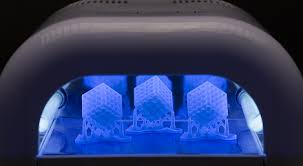
Application scenario: Improved cross-system photocuring efficiency
1. Cationic photocuring system
Cationic systems are commonly used for curing epoxy resins, and their reaction process relies on acid catalysis. PAS 20 accelerates the acid generation rate by enhancing the light absorption efficiency of the photoinitiator, thereby shortening the curing cycle. Experimental data show that under the same lighting conditions, the curing speed of the system with the addition of PAS 20 can be increased by 20%-30%, while maintaining the heat resistance and mechanical strength of the cured product.
2. Free radical photocuring system
Free radical systems are mostly used for the polymerization of acrylate monomers, but are sensitive to the oxygen barrier effect. PAS 20 can not only increase the quantum yield of the photoinitiator, but also reduce the impact of the oxygen barrier effect by optimizing the generation path of free radicals. For example, after adding PAS 20 to UV coatings, the surface hardness of the coating can be increased by 1-2 levels, and the curing uniformity is significantly improved.
As a dual-system photoinitiator enhancer, the cross-system compatibility of PAS 20 makes it an ideal choice for multi-material composite curing processes. For example, in a mixed system that requires simultaneous curing of epoxy resin and acrylate, PAS 20 can coordinate the rates of the two types of reactions to avoid internal stress problems caused by uneven curing.
Usage suggestions: scientific proportion and optimization scheme
To ensure the best performance, it is recommended to pre-configure PAS 20 into a 10% concentration solution before adding it to the system. This step can not only improve the uniformity of dispersion, but also avoid agglomeration caused by excessive local concentration. In specific operations, the addition amount needs to be adjusted according to the substrate type and lighting conditions:
- Low viscosity system (such as varnish): the recommended addition amount is 0.5%-1.0%;
- High viscosity system (such as adhesive): it can be appropriately increased to 1.0%-1.5%, and the stirring time can be extended to ensure sufficient mixing.
It should be noted that the wavelength distribution of different light sources may affect the sensitization effect of PAS 20. It is recommended to verify its synergy with specific photoinitiators through small-scale experiments before use, and optimize the formula based on the results.
Market competitiveness: technical advantages and future potential
In the current industrial photocuring market, single-system photoinitiators can no longer meet the needs of complex processes. The launch of PAS 20 fills the technical gap of dual-system photoinitiator enhancers, and its core advantages are reflected in three aspects:
1. High efficiency and energy saving: low addition amount can achieve significant performance improvement and reduce overall cost;
2. Multifunctional adaptation: compatible with cationic and free radical systems, broadening the application boundaries;
3. Stability guarantee: no yellowing, high drying, ensuring the quality of end products.
In the future, as photocuring technology develops towards a more precise and environmentally friendly direction, PAS 20, which has both high efficiency and compatibility, is expected to play a greater role in emerging fields such as new energy and microelectronics packaging.
As a representative of technological innovation in the field of photosensitive materials, PAS 20 provides the industry with efficient and flexible solutions through a dual-system synergistic enhancement mechanism. Its scientific design concept and measured performance not only meet the current market demand, but also lay a solid foundation for the upgrade of the next generation of photocuring technology.