


In the field of photocurable materials, the performance of the photoinitiator directly determines the curing speed, conversion rate and stability of the final product. As a triarylsulfonium salt photoinitiator, Uyracure-180 has become a representative product in the field of highly reactive photoinitiators due to its unique molecular structure and photochemical properties. This article will analyze the innovative value of this product from the dimensions of technical principles, application advantages and adaptation scenarios.
1. Molecular structure determines performance breakthrough
The chemical name of Uyracure-180 is 4-(phenylthio)phenyl diphenylsulfonium hexafluoroantimonate, and its molecular structure contains a synergistic combination of three aromatic ring systems and hexafluoroantimonate anions. This design enables the compound to quickly release strong acidic substances under ultraviolet light excitation, and initiates efficient polymerization reactions of epoxy compounds or vinyl ether monomers through a cationic polymerization mechanism. Compared with traditional iodonium salt photoinitiators, its photolysis efficiency is increased by about 30%, and it has a wider wavelength response range.
The strong electron-withdrawing properties of hexafluoroantimonate enable Uyracure-180 to produce more active Lewis acids during photolysis, which enables it to maintain excellent initiation efficiency in deep curing scenarios. Experimental data show that in a 400μm thick epoxy resin system, its curing completeness can reach more than 95%, showing significant advantages as a highly reactive photoinitiator.
2. Technical characteristics and performance advantages
1. Ultra-high photosensitivity
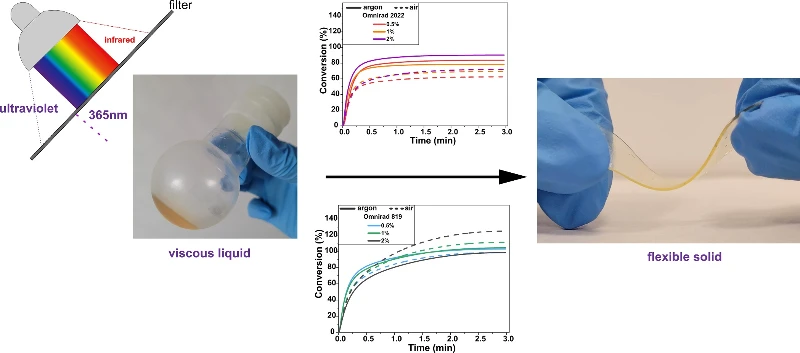
Under a 365nm ultraviolet light source, the photon yield of Uyracure-180 can reach more than 0.8, which means that each absorbed photon can trigger the polymerization reaction of multiple monomer molecules. This chain reaction characteristic enables it to maintain rapid curing under low light intensity, and is particularly suitable for heat-sensitive substrate processing.
2. Excellent thermal stability
After the compound is stored at 80°C for 200 hours, the photoinitiator activity still maintains more than 98% of the initial value. This thermal stability makes it suitable for coating processes that require preheating, while ensuring performance stability during storage and transportation.
3. Broad spectrum response characteristics
In addition to the main absorption peak of 365nm, Uyracure-180 shows significant photoresponsivity in the range of 300-420nm. This broad spectrum characteristic makes it compatible with UV-LED light source systems of different bands, and is particularly outstanding in energy-saving curing equipment.
3. Analysis of innovative application scenarios
As a highly reactive photoinitiator, Uyracure-180 demonstrates unique value in multiple fields:
· Precision electronic packaging: In the field of semiconductor packaging glue, its fast curing characteristics can shorten the production cycle by 15%, while avoiding thermal stress damage to the chip caused by traditional thermal curing
· 3D printing consumables: When used in combination with free radical initiators, it can achieve precise curing of 0.1mm layer thickness, and the surface smoothness Ra value is less than 0.5μm
· Automotive coating system: In the application of varnish layer, the cationic curing system can form a dense cross-linked network, which can increase the pencil hardness of the paint surface to 3H level
· Medical catheter coating: The low migration characteristics meet the ISO 10993 biocompatibility requirements and have been successfully used in the surface treatment of interventional medical devices.
IV. Process adaptation and usage recommendations
The following technical points should be noted in practical applications:
1. The recommended addition amount is 0.5%-2.5% of the total system amount. Excessive use may cause side reactions
2. When compounding with free radical photoinitiators, the viscosity change of the system needs to be monitored by a rheometer
3. In the hydroxyl monomer system, it is recommended to add 0.1% of proton capture agent to extend the application period
4. The illumination of the curing equipment should not be less than 50mW/cm², and the optimal exposure time is 3-8 seconds.
5. Outlook on Industry Development Trends
With the popularization of UV-LED technology and the increase in energy consumption requirements, the market demand for highly reactive photoinitiators continues to grow. Products such as Uyracure-180, which have both efficient initiation and stable storage characteristics, are driving photocuring technology towards a more energy-saving and precise direction. In the future, its technological advantages will be more fully demonstrated in emerging fields such as flexible display packaging and 5G communication materials.
Conclusion:
Today, with the continuous breakthroughs in photocuring technology, Uyracure-180 has achieved a dual improvement in photoinitiator efficiency and system stability through precise molecular design. As a typical representative of highly reactive photoinitiators, its technical characteristics not only meet the stringent requirements of current industrial production, but also provide new possibilities for the development of next-generation photocurable materials. With the deepening of application research, this product will play a key role in more high-end manufacturing fields.