


In the fields of precision optics, electronic packaging and 3D printing, highly transparent UV resin has become a core material of concern in the industry due to its excellent optical properties and fast curing characteristics. This article will analyze the core value of this material from the perspective of technical advantages, application scenarios and market trends, and explore its technological breakthrough direction in combination with Shenzhen U-Sunny's LM-301 low refractive index monomer product.
1. Core advantages of high-transparency UV resin
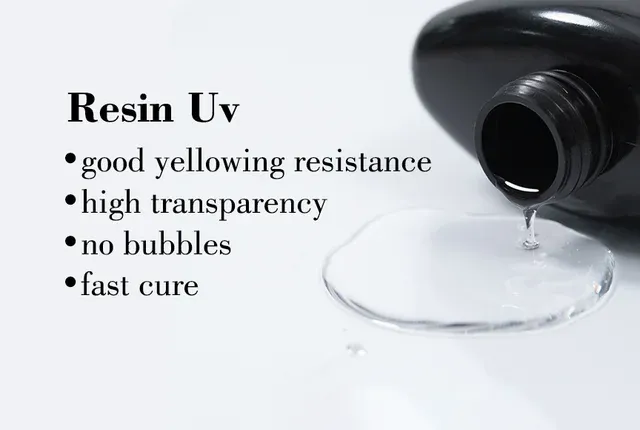
High-transparency UV resin can achieve a light transmittance of over 98% by optimizing the monomer structure and photoinitiator ratio, especially in the visible light band (400-700nm) with almost no light loss, which is suitable for scenes such as precision lenses and display screen coatings. For example, the LM-301 low-refractive index monomer (refractive index 1.45) launched by Shenzhen Youyang not only reduces the light scattering effect of the material, but also improves the anti-yellowing ability through nano-level molecular design, and can maintain stability even under long-term ultraviolet irradiation.
In addition, the shrinkage rate of the resin after curing is less than 2%, combined with the high cross-linking density characteristics, which can reduce the stress cracking problem during the molding process, providing a reliable solution for microelectronic packaging and precision mold manufacturing.
2. Expansion of diversified application scenarios
Optical device manufacturing: such as LED lenses, optical fiber coatings, etc., using high light transmittance and low refractive index to improve light efficiency. Taking LM-301 as an example, its low refractive index design can reduce interface reflection and adapt to a variety of optical glass materials.
Electronic packaging field: The rapid curing (seconds) characteristics of UV resin can improve production efficiency, while its high temperature resistance (tolerance to 150°C) ensures chip packaging reliability.
3D printing and creative design: High transparency and low viscosity make it suitable for photocuring printing, meeting the molding needs of fine structures such as jewelry and medical devices.
3. Technological breakthroughs and future trends
Shenzhen Youyang and other companies have further optimized the optical properties of UV resins through innovative research and development of low-refractive index monomers. For example, LM-301 uses a special modified acrylate structure to reduce the refractive index while enhancing toughness, solving the problem of high brittleness of traditional resins. In the future, with the popularization of Mini LED and AR/VR devices, the requirements for weather resistance and light transmittance uniformity of UV resins will be higher, and material formulation and process innovation will still be the key to competition.
Conclusion
As a representative of high-performance materials, highly transparent UV resin is driving the upgrade and iteration of multiple industries. Low-refractive index products such as Shenzhen Youyang LM-301 demonstrate the full-chain technical strength from basic research to market application. Enterprises need to continue to pay attention to customer needs and consolidate their market competitiveness through customized formulas and environmentally friendly processes (such as solvent-free systems).