


With the widespread application of ultraviolet (UV) curing technology in coatings, 3D printing, electronic packaging and other fields, the performance optimization of photoinitiators has become a core issue in the industry. Although traditional cationic photoinitiators have advantages such as low shrinkage and high adhesion, they have challenges such as limited curing speed and insufficient thermal stability. **Hybrid Photo-Thermal Cationic Initiators** break through the efficiency bottleneck of a single energy source by combining the dual mechanisms of light excitation and thermal activation, and become the core technology of a new generation of high-performance curing systems.
Innovative companies represented by Shenzhen U-Sunny Technology have launched products such as U-9100A resin based on this technology. Its hybrid system achieves rapid curing at 300-400 mJ/cm² energy, is compatible with LED long-wave light sources, and provides efficient solutions for thin film printing, UV inkjet and other fields.
Technical principles and advantages
1. Photothermal synergistic effect improves curing efficiency
Hybrid photothermal cationic initiators achieve performance leaps through the following mechanisms:
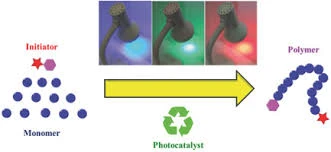
Photoexcitation: Under UV light source (such as 365–405 nm LED), the photosensitive component quickly generates active cations to start the polymerization reaction.
Thermal activation: Residual heat energy further activates the thermosensitive component, prolongs the reaction chain and accelerates the increase of crosslinking density, which is especially suitable for thick coatings or complex structures.
Research shows that the photothermal synergistic system can increase the curing speed by more than 30% while reducing energy consumption.
2. Thermal stability and low viscosity characteristics
U-9100A resin of Youyang Technology adopts a cation-free radical hybrid system. Its low viscosity characteristics (<500 cP) ensure the fluidity of the material in inkjet printing and microchannel filling, and the thermal stability design (temperature resistance up to 120°C) avoids side reactions in high temperature environments, which is suitable for harsh scenarios such as automotive electronic packaging.
3. Wide wavelength compatibility
By optimizing the ratio of photosensitizers (such as benzophenone derivatives) and thermal initiators (such as iodonium salts), the hybrid system can adapt to LED light sources of different wavelengths and reduce the cost of equipment upgrades. Experiments show that its curing efficiency under long-wave UV (395–405 nm) is 25% higher than that of traditional systems.
Application scenarios and case analysis
1. Film printing and packaging coatings
In the field of food packaging, hybrid photothermal initiators reduce thermal deformation of substrates through low-temperature curing while meeting FDA contact safety standards. U-Sunny's customer cases show that its ink system has an adhesion of 5B (ASTM D3359) on PET film and a curing time of less than 2 seconds.
2. 3D printing and precision electronics
Using thermal activation properties, this technology can penetrate high-filler systems (such as ceramic/metal composite slurries) to achieve deep curing. After a 3D printing equipment manufacturer used U-9100A resin, the interlayer bonding strength increased by 40% and the support structure removal efficiency increased by 60%.
3. Photovoltaic module encapsulation
Combined with the photovoltaic-thermal synergistic system (PV/T), hybrid photothermal initiators can recycle solar panel waste heat for the curing process. Studies have shown that such integrated designs increase overall energy utilization by 18% while reducing the defect rate of module encapsulation.
Industry trends and future prospects
According to the International Energy Agency (IEA), by 2030, the market size of photocurable materials will exceed US$20 billion, of which photothermal hybrid technology is expected to account for 35%. Future development directions include:
Intelligent formula design: Optimize the ratio of initiator components through machine learning, and dynamically match different light sources and substrate requirements.
Sustainability upgrade: Develop bio-based photosensitive monomers to reduce VOCs emissions and comply with EU REACH regulations.
Ultra-high-speed curing system: Combine pulsed UV light source and microwave heating technology to achieve millisecond-level complete curing.
Hybrid Photo-Thermal Cationic Initiators are reshaping the technical boundaries of the UV curing industry through the synergy of photothermal energy and material innovation. Shenzhen U-Sunny Technology and other companies have verified its comprehensive advantages in efficiency, stability and cost through the commercial application of U-9100A series products. With the further integration of photovoltaic-thermal energy integrated systems (PV/T) and intelligent algorithms, this technology is expected to release greater potential in the fields of green manufacturing and renewable energy.