


With the rapid development of LED packaging technology, photoinitiators, as the core components of photocurable materials, are becoming an important driver for improving packaging efficiency and product performance. With the growing demand for high reliability, environmental protection and miniaturization in the LED industry, the technological innovation and application scenarios of photoinitiators are also expanding. This article will deeply explore the role, technological progress and future trends of LED packaging photoinitiators to provide comprehensive insights for industry practitioners.
1. The role of photoinitiators in LED packaging
Photoinitiators are key additives in photocurable materials (such as epoxy resins, silicones, etc.). They absorb light energy of a specific wavelength to produce active substances (such as free radicals or cations), triggering the polymerization reaction of packaging materials, thereby achieving rapid curing. In LED packaging, the performance of photoinitiators directly affects the following aspects:
Curing efficiency: Efficient photoinitiators can shorten the production cycle and improve packaging efficiency, especially suitable for automated production line requirements.
Material properties: The choice of photoinitiators affects the light transmittance, heat resistance and mechanical strength of packaging materials, which in turn determines the life and reliability of LED products.
Environmental protection: Traditional photoinitiators may contain toxic ingredients, while new environmentally friendly photoinitiators can reduce pollution during the production process, in line with the trend of green manufacturing.
2. Technological progress of LED packaging photoinitiators
In recent years, as packaging technology has developed towards high precision and miniaturization, the field of photoinitiators has also ushered in a number of innovations:
1. Highly compatible and low-toxic materials
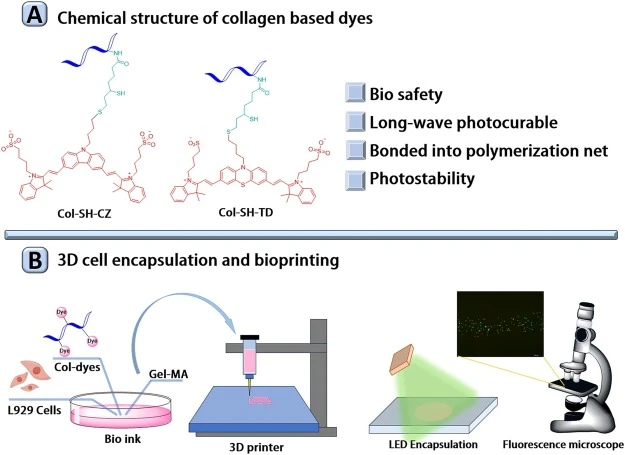
In order to meet the requirements of LED packaging for material safety, researchers have developed photoinitiators based on macromolecular structures or water-based systems. For example, some companies have launched benzene-free and low-mobility photoinitiators, which significantly reduce the negative impact of packaging materials on the environment.
2. Wavelength adaptability optimization
LED chips have diverse luminous wavelengths (such as blue light and ultraviolet light). The new generation of photoinitiators can accurately match light sources of different wavelengths by adjusting the absorption spectrum to improve curing uniformity. For example, for UV-LED packaging needs, narrow-band absorption photoinitiators have become a research hotspot.
3. Intelligence and functionalization
Under the trend of intelligent lighting and miniaturization, photoinitiators are given more functions. For example, some photoinitiators can be combined with temperature-sensitive materials to achieve the self-repair function of packaging materials and extend the life of LED products.
3. Application scenarios and market prospects
The application of photoinitiators has penetrated into multiple LED packaging fields:
General lighting: used for rapid packaging of indoor and outdoor lamps to improve production efficiency.
Display technology: In Mini/Micro LED display screens, high-precision photoinitiators support micron-level packaging structures to ensure display uniformity.
Automotive lighting: High-temperature resistant photoinitiators are suitable for automotive LED headlights to ensure stability in extreme environments.
According to market forecasts, the global LED packaging market size will exceed 100 billion yuan in 2025, and the demand for photoinitiators as key materials will also grow simultaneously. Especially in China, policy support for the semiconductor industry and the strengthening of environmental protection regulations will further promote the research and development and commercialization of high-performance photoinitiators.
4. Future Development Trends
Environmental protection and sustainability: Bio-based photoinitiators and recyclable materials will become mainstream, reducing carbon emissions in the production process.
High precision and miniaturization: With the popularization of Mini LED and Micro LED technology, photoinitiators need to support smaller packaging structures and promote the development of nano-scale curing technology.
Intelligent integration: Combining the Internet of Things and AI technology, photoinitiators may be embedded with sensor functions to achieve real-time monitoring and optimization of the packaging process.
As the "invisible engine" of LED packaging technology, the innovation of photoinitiators directly determines the industry's technical level and market competitiveness. In the future, with the deep integration of material science and photochemistry, photoinitiators will continue to make breakthroughs in the direction of high efficiency, environmental protection, and intelligence, injecting more vitality into the LED industry. Enterprises need to keep up with technological trends and increase R&D investment to gain an advantage in global competition.