


In the rapidly evolving field of UV-curable materials, low viscosity acrylate monomers like OPPEA (Polyethylene glycol o-phenylphenyl ether acrylate) have emerged as game-changers. As a key component in Shenzhen U-Sunny's HM-102 high refractive index resin, OPPEA combines exceptional optical performance with eco-friendly processing. This article explores the technical advantages, applications, and market potential of OPPEA and HM-102, positioning U-Sunny as a leader in advanced material innovation.
What is OPPEA? Key Properties and Functions
OPPEA (CAS 72009-86-0) is a monofunctional acrylate monomer characterized by its low viscosity (130–170 mPa·s at 25°C) and high refractive index (nD = 1.576). Its molecular structure incorporates aromatic rings, providing unique benefits:
Reactive Dilution: Reduces formulation viscosity, enabling smooth application in coatings and adhesives .
High Transparency: Ideal for optical films, lenses, and displays .
Low Volatility & Irritation: Enhances workplace safety and compliance with VOC regulations .
Chemical Resistance: Withstands harsh environments, including moisture and solvents .
OPPEA's versatility makes it critical in UV-curable resins, 3D printing, and electronic photoresists .
U-Sunny's HM-102 High Refractive Index Resin: Technical Breakthroughs
Shenzhen U-Sunny's HM-102 resin leverages OPPEA's properties to deliver cutting-edge performance in optical applications:
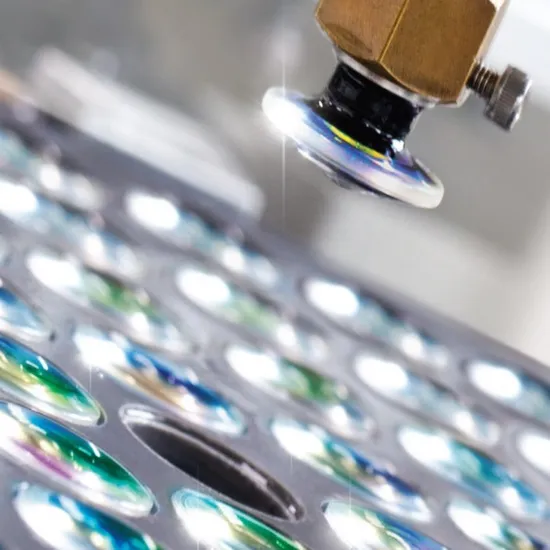
1. Superior Optical Performance
Refractive Index: 1.60–1.63 (adjustable for specific needs) .
Low Shrinkage: <3% volume contraction during curing, ensuring dimensional stability for precision optics .
Rapid Curing: Achieves full polymerization in <30 seconds under 365 nm UV light, boosting production efficiency .
2. Mechanical and Environmental Durability
Thermal Resistance: Stable up to 200°C, suitable for automotive and industrial sensors .
Hydrolytic Stability: Maintains performance in humid or corrosive environments .
Eco-Friendly: Near-zero VOC emissions, compliant with RoHS and REACH standards .
3. Applications
Optical Coatings: Anti-reflective layers for AR/VR lenses and smartphone screens .
Flexible Displays: Thin, bendable films for foldable OLED devices .
5G Communications: Protective coatings for fiber optics and LiDAR systems .
U-Sunny's Innovation in UV-Curable Solutions
As a pioneer in UV/EB curing technologies, U-Sunny integrates OPPEA into HM-102 to address industry challenges:
Customizable Formulations: Adjust viscosity, refractive index, and Tg for niche applications like biomedical sensors .
Cost Efficiency: Low dosage requirements (5–8% by weight) reduce raw material costs by 15–20% .
Global Reach: Products are available across 20+ countries, supported by R&D collaborations .
Market Outlook and Sustainability
The global demand for high-refractive-index resins is projected to grow at 8.5% CAGR (2025–2030), driven by optoelectronics, automotive sensors, and renewable energy systems . U-Sunny's HM-102 aligns with sustainability trends through:
Recyclable Formulations: Supports circular economy initiatives.
Energy Savings: Fast curing reduces power consumption in manufacturing
Conclusion
Low viscosity acrylate monomer OPPEA and U-Sunny's HM-102 resin represent a paradigm shift in optical material engineering. By combining high refractive index, rapid curing, and environmental compliance, HM-102 is poised to revolutionize industries from consumer electronics to advanced telecommunications. For OEMs seeking performance-driven, sustainable solutions, U-Sunny's innovations offer a competitive edge in the global market.