


In the dynamic world of specialty chemicals, low viscosity Isobornyl Methacrylate (IBOMA) stands out as a game-changing monomer, particularly in high-solids formulations for coatings, inks, and adhesives. Shenzhen U-Sunny's AM-315M, a flagship product in this category, exemplifies innovation with its unique balance of low viscosity, high glass transition temperature (Tg), and environmental compliance.
The Unique Chemistry of Low Viscosity IBOMA
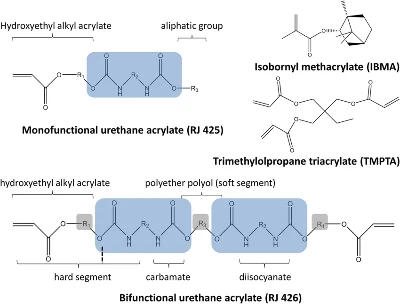
Isobornyl Methacrylate defies conventional polymer behavior by offering low viscosity despite its high homopolymer Tg (110°C). This anomaly arises from its bulky isobornyl group, which reduces intermolecular forces while maintaining rigidity . The Williams-Landel-Ferry (WLF) equation, typically linking lower Tg to lower viscosity, highlights IBOMA's exceptionality: its structure enables high-solids resins to retain workable viscosities even at elevated solids content . Such properties make it a superior partial replacement for Methyl Methacrylate (MMA) in acrylic copolymers .
Applications Across Industries
1. Coatings: Durability Meets Sustainability
IBOMA-based formulations enhance scratch resistance, hydrophobicity, and chemical stability in automotive and industrial coatings. For instance, Evonik's VISIOMER® Terra IBOMA is leveraged for solvent-borne coatings to reduce VOC emissions without compromising gloss. U-Sunny's AM-315M excels here, offering a viscosity of 8.5 mPa·s at 20°C and compatibility with polyesters, alkyds, and UV-curable systems .
2. Inks: Precision and Performance
In UV-curable inks, IBOMA acts as a reactive diluent, reducing viscosity while improving adhesion to plastics like PET and PE. Its bicyclic structure minimizes shrinkage during curing, critical for high-resolution printing on flexible substrates. AM-315M's low volatility and fast curing kinetics align with demands for eco-friendly, high-speed printing processes.
3. Adhesives: Strength Without Compromise
IBOMA reduces polymerization shrinkage in adhesives, enhancing bond strength and thermal resistance. Studies show IBOMA-modified waterborne polyurethanes achieve a 55% reduction in water absorption and a tensile strength boost to 55.18 MPa. U-Sunny's AM-315M is ideal for pressure-sensitive adhesives and optical fiber coatings, where dimensional stability and low irritation are paramount.
U-Sunny AM-315M: Technical Excellence
Shenzhen U-Sunny's AM-315M stands out with:
Viscosity: 8.5 mPa·s at 20°C, enabling easy processing in high-solids systems.
Thermal Resistance: Stable up to 200°C, suitable for automotive and electronic applications.
Regulatory Compliance: Meets RoHS and REACH standards, aligning with global low-VOC trends .
Compared to competitors like Mitsubishi Chemical and Evonik, AM-315M offers cost efficiency through lower dosage requirements (5–8% by weight) and rapid UV curing, reducing energy consumption by 15–20%.
Market Trends and Future Outlook
The global IBOMA market, valued at $69 million in 2022, is projected to grow at a 3.3% CAGR through 2031, driven by demand for bio-based and high-performance materials . U-Sunny's focus on R&D-such as nanoparticle integration for refractive index control-positions AM-315M at the forefront of innovations in smart coatings and 5G fiber optics.
Conclusion
Low viscosity Isobornyl Methacrylate redefines performance in coatings, inks, and adhesives by merging processability with durability. Shenzhen U-Sunny's AM-315M embodies this advancement, offering a sustainable, high-efficiency solution for industries prioritizing quality and environmental stewardship. As regulations tighten and technologies evolve, IBOMA-based products like AM-315M will remain pivotal in shaping the future of specialty chemicals.