


In the evolving chemical industry, low VOC Isobornyl Methacrylate (IBOMA) formulations have emerged as a game-changer for eco-friendly, high-performance materials. As global environmental regulations tighten, manufacturers like Shenzhen U-Sunny are leading innovation with products such as AM-315M, a premium-grade IBOMA formulation designed for coatings, inks, and adhesives. This article explores the unique properties of IBOMA, its applications, and why it aligns with the industry's shift toward sustainability.
What Makes IBOMA a Superior Low-VOC Solution?
Isobornyl Methacrylate (CAS 7534-94-3) is a versatile monomer renowned for its exceptional balance of hardness, flexibility, and environmental compliance. Its bicyclic molecular structure enables polymers to achieve high gloss, scratch resistance, and excellent weather resistance, outperforming traditional methacrylates like MMA . Key attributes include:
Low Volatility: With a vapor pressure of 0.11 mmHg and Henry's Law Constant of 2.4×10⁻⁴ atm-cu m/mol, IBOMA minimizes VOC emissions during application .
Enhanced Stability: Storage at temperatures below 30°C ensures a shelf life of up to 12 months, making it ideal for industrial use .
Reactivity: As a low-viscosity diluent, IBOMA facilitates free-radical polymerization, forming polymers with high glass transition temperatures (Tg) for durable coatings and adhesives .
Applications Across Industries
1. Coatings
IBOMA-based formulations, such as U-Sunny's AM-315M, are widely used in automotive, architectural, and marine coatings. The monomer's low hygroscopicity ensures reduced water absorption, enhancing corrosion resistance and longevity. High-solid acrylic resins incorporating IBOMA meet stringent VOC limits while delivering sharp aesthetics and abrasion resistance .
2. Inks and Photoresists
In UV-curable inks, IBOMA acts as a reactive solvent, improving adhesion and reducing solvent content. Its compatibility with polyester and alkyd resins supports vibrant, durable prints for packaging and electronics .
3. Adhesives
IBOMA enhances the chemical and thermal resistance of acrylic adhesives. For instance, AM-315M is optimized for high-performance bonding in automotive and construction sectors, where low VOC emissions are critical .
Driving the Low-VOC Transition in the Chemical Industry
The global push for sustainability has accelerated demand for low-VOC materials. According to MarketsandMarkets, the low-VOC coatings market is projected to grow at a 6% CAGR from 2025 to 2031, driven by regulations in Europe and North America . Key trends include:
Regulatory Compliance: Policies like China's 2025 mandate for solvent-free coatings and the EU's REACH regulations prioritize IBOMA-based solutions .
Water-Based Resins: IBOMA's compatibility with water-based systems supports the shift toward eco-friendly formulations without compromising performance .
3D Printing and Micro-Manufacturing: High-purity IBOMA monomers are critical for advanced manufacturing, where precision and low emissions are paramount .
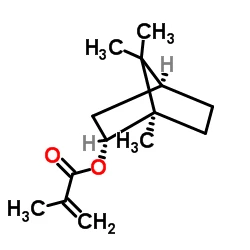
U-Sunny's AM-315M: A Benchmark in Innovation
Shenzhen U-Sunny's AM-315M exemplifies cutting-edge IBOMA technology. This product offers:
Purity >98.5%: Ensures consistent performance in high-end applications.
Versatility: Suitable for UV-cured systems, powder coatings, and high-solid resins.
Sustainability: Aligns with circular economy principles by reducing solvent use and waste .
Conclusion
Low VOC IBOMA formulations like AM-315M are redefining standards in the chemical industry. By combining regulatory compliance with unmatched performance, they address the dual challenges of sustainability and functionality. As industries prioritize greener alternatives, IBOMA stands out as a cornerstone for future-ready coatings, inks, and adhesives.