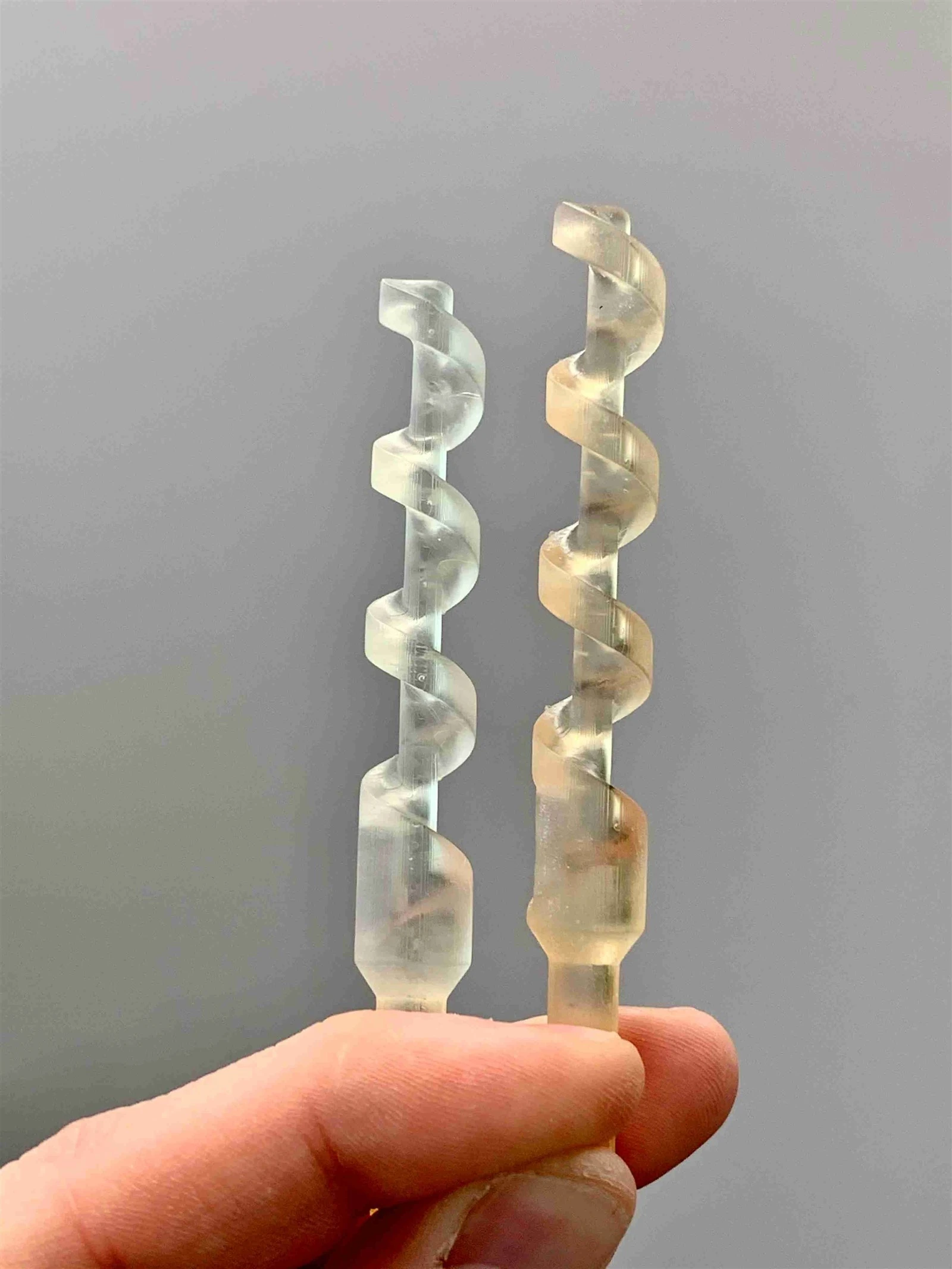
In the field of photocurable materials, epoxy resins are widely used in electronic packaging, optical coatings and industrial coatings due to their excellent mechanical strength and chemical resistance. However, traditional epoxy systems are prone to yellowing due to photothermal aging during long-term use, which directly affects the aesthetics and performance stability of the product. To address this pain point, Non-Yellowing Epoxy Thermal Initiator came into being and became a key technical component to improve the durability of materials.
1. Core technical advantages of anti-yellowing epoxy thermal initiator
Long-term anti-yellowing performance
By optimizing the molecular structure of sulfonium salt cationic initiators (such as triarylsulfonium hexafluorophosphate), the generation of benzene ring derivatives in photolysis byproducts is significantly reduced, thereby inhibiting the yellowing of the material. Experiments show that after 1000 hours of UV accelerated aging, the Δb value (yellowing index) of the epoxy resin added with this initiator is 60% lower than that of traditional products.
Deep curing and fast reaction efficiency
The use of a cation-free radical hybrid system combined with a thermal activation mechanism can trigger epoxy ring-opening polymerization under mild conditions as low as 80°C, achieving uniform deep curing with a thickness of more than 500μm, while maintaining a surface drying speed within 30 seconds, meeting the needs of high-precision electronic packaging processes.
Environmental compatibility
Does not contain volatile and harmful solvents such as DMF and MEK, complies with RoHS and REACH regulations, and is suitable for food contact packaging coatings and medical device packaging.
2. Typical application scenarios and formula design suggestions
High-end electronic packaging materials
Recommended formula: epoxy resin (60%) + U-Sino U-9310 cationic hybrid resin (25%) + Thermal Initiator T-205 (3%) + silica powder (12%)
Performance: hardness after curing reaches 3H, dielectric constant ≤3.2 (1MHz), resistance to wet heat aging (85℃/85% RH) 1000 hours without delamination.
Anti-yellowing optical coating
Technical highlights: Use low-viscosity UV monomer (such as UM-440, viscosity 3.5cPa.s) to improve leveling, the cured film transmittance is >92%, the haze is <0.5%, suitable for LED lens and display screen protective film.
Industrial anti-corrosion coating
Chemical resistance test: After immersion in 10% sulfuric acid/sodium hydroxide solution for 30 days, the coating has no blistering and shedding, and the color difference ΔE is <1.5, which meets the long-term protection needs of petrochemical equipment.
3. Five reasons to choose U-Sunny products
Technology collaborative innovation: patented technology of cationic and free radical dual curing mechanism, breaking through the performance limitations of a single system.
Customized solutions: provide a full range of supporting products from initiators, resins to functional monomers, and support formula collaborative optimization.
Global certification system: passed international certifications such as UL and SGS, and adapted to strict industry standards such as automobiles and aerospace.
Balance between environmental protection and economy: low addition (0.5%-3%) achieves efficient initiation and reduces comprehensive costs by more than 20%.
Technical support network: open MSDS, TDS and 200+ application case databases, providing online formula simulation tools.
With the rapid development of 5G communications and new energy industries, yellowing-resistant epoxy thermal initiators are evolving towards low-temperature activation and photothermal dual response. The CTI series products newly developed by Shenzhen Youyang Technology have achieved controllable curing below 120°C and are compatible with UV/heat dual triggering modes, providing a higher-precision control solution for flexible circuit boards and micro-sensor packaging.