


With the tightening of environmental regulations and the improvement of material performance requirements in industrial manufacturing, non-yellowing light-curing materials have become the research and development focus in the fields of coatings, inks, adhesives, etc. due to their excellent weather resistance and low color change characteristics. This article analyzes the technical advantages of non-yellowing light-curing systems from the perspectives of technical principles, application scenarios and core material innovation, and focuses on the breakthrough application of U-Sunny PAS-50 photosensitizer.
1. Technological breakthroughs in non-yellowing photocurable materials
Traditional photocurable materials are prone to yellowing due to residual photoinitiators or migration of byproducts, which affects the appearance and durability of the product. Non-yellowing materials achieve performance optimization through the following technologies:
Selection of low-yellowing photoinitiators: Use high molecular weight or low migration photoinitiators (such as TPO-L, lignin-based initiators) to reduce the degradation effect of residual small molecules on the material. For example, TPO-L liquid photoinitiator exhibits low yellowing characteristics in UV LED curing systems and is suitable for white coatings and high-transparency inks.
Macromolecule design and environmentally friendly formula: The photoinitiator is fixed on the polymer chain through copolymerization or cross-linking technology to reduce the risk of migration. The lignin-based photoinitiator developed by the Chinese Academy of Forestry not only reduces yellowing, but can also be used in underwater adhesives, with a 60% increase in anti-migration performance.
Optimization of light source matching: Combined with UV LED narrow wavelength light sources (365-405nm), select photosensitizers with matching absorption peaks (such as PAS-50) to shorten the curing time and inhibit side reactions, thereby avoiding yellowing.
2. Multi-field application scenarios
1. High-end coatings and coatings
In the fields of automobiles and electronic equipment, non-yellowing photocurable coatings need to be both resistant to high temperatures and weathering. For example, high-temperature UV-LED embossing inks on glass surfaces add frits (softening temperature 610-710°C), and the resin is completely decomposed after sintering at 685°C, leaving only a high-temperature resistant texture layer, achieving a residue-free, high-adhesion and scratch-resistant surface effect.
2. Functional inks and printing
Anti-counterfeiting inks and food packaging printing have extremely high safety requirements. UV inks with low-toxicity photoinitiators (such as 184 and 1173) can avoid the risk of migration of carcinogens such as benzophenone (BP), while adding nanofillers (such as graphene) to improve wear resistance and conductivity.
3. High-performance adhesives
In the field of electronic packaging, non-yellowing UV adhesives need to meet the stability requirements in high-temperature environments. U-Sunny PAS-50 sensitizer optimizes photosensitivity (30% higher than traditional materials), can complete deep curing within 3 seconds, and has a thermal stability of 200°C, making it suitable for scenarios such as automotive hood coatings.
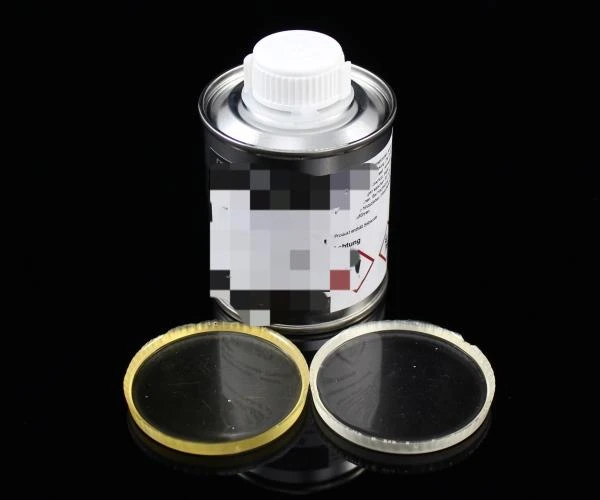
3. U-Sunny PAS-50: Core material to promote industry upgrade
As a key component of non-yellowing photocuring system, U-Sunny PAS-50 photosensitizer has the following innovative features:
High efficiency initiation and low residue: Designed for 365-405nm UV LED, photosensitivity efficiency is increased by 30%, reducing the risk of yellowing caused by unreacted initiator;
High temperature resistance and environmental compatibility: Heat resistance up to 200℃, suitable for high temperature curing process, and does not contain heavy metals and halogens, in line with RoHS standards;
Multifunctional adaptability: It can cooperate with fillers such as carbon fiber and nano-alumina to customize antistatic or antibacterial functional coatings, and expand to high-end fields such as medical sensors.
4. Future trends and challenges
With the rise of bio-based materials, the combination of renewable resins such as castor oil derivatives and photocuring technology has become a hot topic. However, how to balance cost and performance and develop more efficient light source-initiator matching solutions is still a difficulty in the industry.
Conclusion
Non-yellowing photocuring materials are reshaping industrial manufacturing standards through technological innovation. The introduction of high-performance sensitizers such as U-Sunny PAS-50 provides environmentally friendly and efficient solutions for the coatings, inks and adhesives industries. In the future, with the integration of biocompatible materials and intelligent manufacturing, non-yellowing technology will open up broader application prospects in new energy, medical and other fields.