


In the field of eyewear manufacturing and high-end optical equipment, **Ophthalmic lens coating monomer** has become a key technology for improving visual clarity due to its core functions of optimizing light transmission and reducing reflection. This article combines Shenzhen U-Sunny's LM-302 low refractive index monomer technology to analyze its innovative value and industry trends in ophthalmic lens coatings.
1. Technical advantages of LM-302 monomer
The LM-302 low-refractive-index monomer (refractive index 1.42-1.45) developed by Shenzhen Youyang significantly reduces the light reflectance (<1.5%) on the surface of the lens through molecular structure modification technology, while maintaining a transmittance of over 97%. Compared with traditional resin materials (such as CR39 or NK55), this monomer reduces the internal stress of the coating through a nano-scale dispersion process, avoids cracking of the film layer, and adapts to the high durability requirements of precision lenses. Its shrinkage rate after curing is as low as 1.2%, combined with high temperature resistance (tolerance to 160°C), it can meet the harsh environmental requirements of medical equipment and outdoor glasses.
In addition, LM-302 supports solvent-free formulas, complies with EU RoHS environmental standards, and is compatible with automated coating equipment (such as Schneider's SHC NANO system), achieving efficient production of more than 40 pieces per hour, significantly reducing energy consumption and waste emissions.
2. Multiple applications of ophthalmic lens coatings
Anti-reflective lenses: The low refractive index characteristics of LM-302 can reduce light reflection at the lens interface, improve light transmission uniformity, and adapt to progressive multifocal lenses and high-diopter corrective lenses.
Blue light protection coating: Combined with UV420 blocking technology, this monomer can effectively filter harmful blue light (wavelength 400-450nm) to protect the eye health of users who use electronic devices for a long time.
Medical optical equipment: such as endoscopes and microscope lenses, the high light transmittance and low dispersion characteristics of LM-302 can improve imaging resolution and color reproduction.
3. Technology Trends and Industry Collaboration
With the popularity of smart glasses and AR/VR devices, the market demand for ultra-thin and flexible coatings is growing. Shenzhen Youyang has developed elastic coating technology for curved lenses through the flexibility improvement of LM-302 monomers, breaking through the physical limitations of traditional hard coatings. At the same time, the company explores compounding with nanomaterials (such as silica) to give the coating additional functions such as anti-fingerprint and scratch resistance to meet the integration needs of high-end consumer electronics.
On the manufacturing side, Youyang cooperates with equipment manufacturers such as Optimal Technologies to optimize the compatibility of LM-302 and CHC150 coating production lines, achieving a coating thickness error of <0.1μm and ensuring consistency in optical performance.
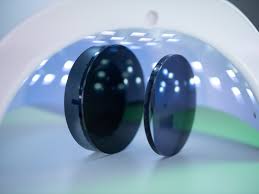
Conclusion
The technological evolution of ophthalmic lens coating monomers is driving the two-way upgrade of visual health and optical manufacturing. Shenzhen Youyang has demonstrated its full-chain capabilities from material research and development to large-scale production by relying on innovative products such as LM-302. In the future, as the demand for personalized vision correction grows, the customized development of low-refractive-index monomers and the deepening of green processes will become the core of industry competition.