


Introduction to OPPEA: A Key Building Block in Advanced Materials
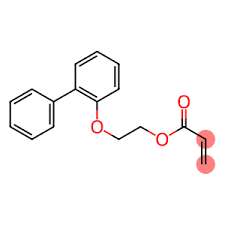
OPPEA (o-Phenyl phenoxy ethyl acrylate), with the CAS numbers 72009-86-0 and 91442-24-9, is a high-performance UV-curable monomer renowned for its unique aromatic ring structure and exceptional optical properties. As a critical component in Shenzhen U-Sunny's HM-102 high refractive index resin, OPPEA plays a pivotal role in applications ranging from optical coatings to 3D printing. This article explores its chemical structure, technical specifications, market dynamics, and the innovative contributions of Shenzhen U-Sunny (优阳) in advancing this material.
Chemical Structure and Physicochemical Properties of OPPEA
Molecular Composition
Molecular Formula: C₁₇H₁₆O₃
Structure: OPPEA features a phenyl phenoxy ethyl backbone linked to an acrylate group, enabling UV-induced polymerization. This design enhances refractive index (RI) and thermal stability.
Key Technical Parameters
| Property | Value |
|---|---|
| Refractive Index (RI) | 1.575–1.576 at 25°C |
| Viscosity | 130–170 mPa·s |
| Density | 1.12–1.15 g/ml |
| Glass Transition (Tg) | 40.5°C |
| Purity | ≥99% |
These properties make OPPEA ideal for high-precision optical resins, where clarity and durability are paramount.
Applications of OPPEA in Cutting-Edge Industries
Optical Resins and Coatings:
Serves as a high-RI diluent in UV-curable resins for lenses, optical films, and adhesives.
Enhances light transmission efficiency in displays and camera modules.
Electronics and 3D Printing:
Used in photolithography for semiconductor manufacturing.
Enables high-resolution 3D printing with low shrinkage.
Industrial Materials:
Improves scratch resistance in automotive coatings.
Acts as a matrix in composite materials for aerospace.
Market Analysis: Global and Chinese OPPEA Trends
The global UV monomer market, driven by electronics and coatings, is projected to grow significantly, with China accounting for 22% by 2029. Key insights:
Supply Chain: Dominated by international players like BASF and domestic leaders like Shenzhen U-Sunny.
Challenges: China's production capacity remains limited, relying on imports from South Korea and Germany.
Opportunities: Local projects, such as Xinnuolixing's 2,000-ton OPPEA plant, aim to reduce import dependency.
Shenzhen U-Sunny's HM-102 Resin: Innovation Meets Performance
Shenzhen U-Sunny (优阳), a national high-tech enterprise with BSCI certification, has developed HM-102 resin using OPPEA as a core component.
HM-102's Competitive Edge
Refractive Index: 1.6–1.9+, customizable for niche applications.
Durability: Offers 20–30% improvement in scratch resistance compared to conventional resins.
Versatility: Compatible with foldable displays, wearables, and high-temperature environments.
Why Choose Shenzhen U-Sunny?
R&D Excellence: Combines fluorinated group optimization with batch stability.
Custom Solutions: Adjusts viscosity, RI, and curing speed to meet client needs.
Global Reach: Products exported to 20+ countries, adhering to international quality standards.
Conclusion: The Future of OPPEA and HM-102
OPPEA's unique chemical structure positions it as a cornerstone of next-gen materials. With Shenzhen U-Sunny leading innovation in HM-102 resin, industries can expect breakthroughs in optical, electronic, and automotive applications. As China expands its production capabilities, OPPEA will play a vital role in reducing import reliance and fostering technological sovereignty.