


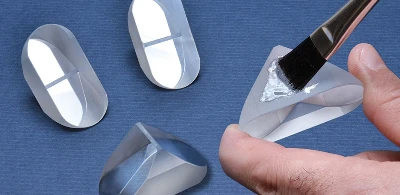
Optical adhesive coatings (OCAs) are critical materials in today's high-tech industries, enabling seamless bonding of optical components while maintaining clarity, durability, and performance. With advancements in display technologies and the rise of smart devices, OCAs have become indispensable in sectors such as consumer electronics, automotive, and advanced optics. This article explores the latest developments in optical adhesive coatings, focusing on breakthroughs like Shenzhen U-Sunny's T-6600 high-refractive-index resin, and their role in driving innovation.
What Are Optical Adhesive Coatings?
Optical adhesive coatings are transparent, pressure-sensitive adhesives designed to bond layers in optical assemblies without compromising light transmission. They are widely used in displays (e.g., smartphones, tablets, automotive screens), touch panels, and optical lenses. Key properties include:
High light transmittance (>95%) for minimal optical distortion.
Dimensional stability to prevent warping or delamination.
Resistance to environmental stress (temperature, humidity, UV exposure).
For instance, OCAs ensure flawless bonding in touchscreens by adhering cover glass, touch sensors, and displays into a single unit, reducing reflection and enhancing durability.
Emerging Trends: Flexible Displays and Automotive Innovations
The global optical adhesive market is projected to grow at a 6.95% CAGR through 2031, driven by demand for foldable devices, OLED screens, and automotive HUDs (Heads-Up Displays). In vehicles, OCAs improve readability in harsh conditions by preventing fogging and glare, while flexible displays rely on ultra-thin, bendable adhesives to maintain structural integrity.
Technological Breakthroughs: U-Sunny's T-6600 High-Refractive-Index Resin
Shenzhen U-Sunny's T-6600 resin represents a leap forward in optical adhesive technology. This UV-curable acrylic resin addresses critical industry challenges with its unique properties:
Refractive Index: 1.60–1.63, reducing light scattering and enhancing brightness in displays.
Low Shrinkage: <1% during curing, ensuring precision in micro-optics and lens assemblies.
Durability: Resists thermal shocks (-40°C to 85°C) and humidity, ideal for automotive and outdoor applications.
Fast Curing: Enables high-speed production lines for consumer electronics.
Competitive Edge: Customization and Sustainability
U-Sunny emphasizes customization, tailoring adhesive formulations to meet specific OEM requirements. For example, its anti-ITO-corrosion OCAs extend the lifespan of touchscreens, while bubble-free variants streamline manufacturing. Additionally, the T-6600's UV-curing process reduces energy consumption by 30% compared to thermal curing, aligning with global sustainability goals.
Future Outlook: AI, AR, and Beyond
As AI-driven devices and AR glasses gain traction, the demand for high-refractive-index adhesives will surge. U-Sunny's R&D focuses on nano-composite resins (e.g., TiO2-infused formulations) to achieve refractive indices above 1.65, further miniaturizing optical systems.
Conclusion
Optical adhesive coatings are pivotal in advancing modern optics and electronics. Innovations like U-Sunny's T-6600 resin highlight the synergy between material science and industrial needs, offering unmatched performance in clarity, durability, and efficiency. For industries seeking cutting-edge solutions, partnering with pioneers like Shenzhen U-Sunny ensures a competitive edge in the rapidly evolving tech landscape.