


Why PAHs-Free Silicone Adhesives Matter in Modern Manufacturing
Polycyclic aromatic hydrocarbons (PAHs) are carcinogenic compounds traditionally found in solvent-based adhesives. As industries shift toward sustainability, PAHs-free silicone rubber adhesives have emerged as a safer, high-performance alternative. These adhesives leverage silicone's inherent properties-chemical inertness, thermal stability (-50°C to 300°C), and UV/ozone resistance-while eliminating hazardous additives .
U-Sunny Shenzhen's HM-101, a cutting-edge PBA (Polybutyl Acrylate) monomer-based adhesive, exemplifies this innovation. Designed for medical, automotive, and electronics applications, HM-101 combines environmental compliance with industrial-grade durability.
Technical Advantages of HM-101: A PBA Monomer Breakthrough
Superior Adhesion on Low-Surface-Energy Substrates
HM-101's silicone-PBA hybrid structure enables strong bonding to plastics (e.g., PP, PE), metals, and elastomers without primers. Its 85–98% elastic recovery minimizes creep under dynamic stress, ideal for automotive seals and flexible electronics .
Solvent-Free Formulation for Reduced Environmental Impact
Unlike solvent-based adhesives, HM-101 uses a platinum-catalyzed system that eliminates volatile organic compounds (VOCs). This aligns with global regulations like REACH and RoHS, reducing HAP emissions by >50% compared to conventional products .
Extreme Temperature and Chemical Resistance
With a 300°C heat resistance and hydrolysis stability, HM-101 maintains performance in harsh environments-from engine components to marine electronics. Its fluorinated backbone resists acids, alkalis, and salt spray, ensuring longevity .
Rapid UV-Curing Efficiency
HM-101 cures in <30 seconds under 365nm UV light, accelerating production cycles. The low shrinkage rate (<3%) prevents micro-cracks in precision optics and MEMS devices .
Market Applications: Where HM-101 Excels
Medical Devices: Biocompatible and non-toxic, HM-101 is used in wearable sensors and implantable drug delivery systems. Its gas permeability supports skin-friendly designs .
Electric Vehicles (EVs): Bonds battery modules and LiDAR sensors, withstanding thermal cycling and vibration.
Consumer Electronics: Enables thin, foldable displays by adhering OLED layers without yellowing .
Renewable Energy: Seals solar panels and wind turbine components against moisture and UV degradation .
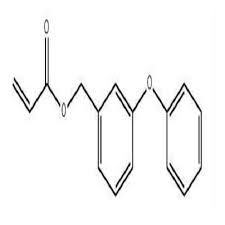
U-Sunny's Technological Leadership in PBA Monomer Innovation
As a pioneer in UV-curable materials, U-Sunny integrates PBA's flexibility with silicone's robustness. HM-101's molecular design features:
Covalent Boronic Acid Crosslinking: Enhances mechanical strength and adhesion energy by 30% versus linear polymers .
Nano-Silica Hybridization: Improves tensile strength (72.64 MPa) and reduces electrode expansion in lithium-ion batteries .
Customizable Viscosity: Adjustable from 500–5,000 cP for spray-coating or screen-printing processes .
Why Choose U-Sunny's HM-101?
Certifications: Compliant with ISO 10993 (biocompatibility) and IATF 16949 (automotive).
R&D Support: Custom formulations for niche applications (e.g., aerospace coatings, self-healing films).
Sustainability: Zero solvent emissions and 20% lower material consumption via optimized curing .
Conclusion: The Future of Silicone Adhesives
The global demand for PAHs-free adhesives is projected to grow at 8.2% CAGR by 2030. U-Sunny's HM-101, with its PBA-driven performance and eco-friendly profile, positions itself as a leader in this transition. For industries prioritizing safety, efficiency, and regulatory compliance, HM-101 is not just an adhesive-it's a strategic advantage.