


With its high efficiency and environmental protection, photocuring technology has become one of the core technologies in the field of modern ink manufacturing and 3D printing. However, in the formulation of black ink, the absorption and scattering effect of high-concentration pigments on light energy often leads to problems such as low curing efficiency and increased energy loss. In response to this pain point, PAS-50 photosensitizer came into being. With its unique light response performance and material compatibility, it has become a breakthrough product in the field of black ink photocuring additives.
Core characteristics of PAS-50 photosensitizer
PAS-50 is a photosensitizer based on thiophene derivatives, with a molecular weight of 190 and a white powder form. Its maximum absorption wavelength is 430nm, which is particularly suitable for cationic curing systems driven by 405nm wavelength LED light sources. Under low-energy light source conditions, PAS-50 can significantly improve the sensitization efficiency of photoinitiators, shorten curing time, and maintain excellent material stability.
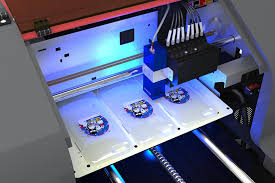
For high-pigment content formulations such as black inks, PAS-50 shows excellent adaptability. Its high solubility and compatibility with the resin system can effectively reduce curing defects caused by uneven pigment dispersion. In addition, the additive also performs well in free radical curing systems, and can penetrate deep materials to achieve uniform curing, avoiding problems such as incomplete surface curing or residual unreacted monomers inside.
Technical advantages: Solving the problem of black ink photocuring
1. High pigment compatibility and improving curing uniformity
The carbon black pigment content in black ink is usually as high as 15%-20%, and its strong absorption characteristics of ultraviolet light seriously restrict the efficiency of traditional photoinitiators. PAS-50 extends the absorption wavelength to 430nm and enhances energy utilization in the visible light region, effectively overcoming the limitation of insufficient energy of 405nm LED light source. Experiments show that the curing speed of black ink with PAS-50 is increased by more than 30% under the same energy input, and the surface gloss and adhesion are significantly optimized.
2. Fast curing and low energy demand
In cationic UV ink applications, PAS-50 accelerates the ring-opening reaction of epoxy resin through sensitization, and can achieve surface drying in seconds even under high pigment loading conditions. This feature is particularly suitable for high-speed printing processes and can greatly improve production efficiency. At the same time, its low energy demand characteristics reduce equipment energy consumption, which is in line with the trend of green manufacturing.
3. Stability and formulation flexibility
PAS-50 has a non-denaturing chemical structure and is not easy to decompose in long-term storage or high-temperature processing environments, ensuring the stability of the formula. In addition, its compatibility with a variety of resin systems (such as acrylates and polyurethanes) provides formulators with a higher degree of adjustment space and can flexibly adapt black ink products with different viscosities and functional requirements.
Application scenarios: from 3D printing to industrial coatings
1. Precision molding of DLP 3D printing
In the field of photocuring 3D printing, the poor light transmittance of black resin often leads to uneven curing between layers, affecting the accuracy of the finished product. PAS-50 enhances the utilization of light energy, allowing the DLP system to achieve a deeper penetration depth in black resin, reduce the need for support structures, and improve the surface detail restoration of complex parts.
2. Efficient printing of cationic UV inks
For metal and plastic substrates commonly used in packaging printing, cationic UV inks need to take into account both adhesion and scratch resistance. Inks with PAS-50 added can cure quickly under low-energy LED light sources while avoiding deformation of the substrate caused by overheating, which is particularly suitable for sensitive scenarios such as food-grade packaging.
3. Deep curing of free radical systems
In thick coating applications (such as wood coatings or electronic packaging adhesives), PAS-50 promotes the activation of free radical initiators through sensitization, achieves synchronous curing from the surface to the inside, significantly reduces bubbles and shrinkage stress, and improves the mechanical properties of the material.
Conclusion: Pushing the boundaries of photocuring technology
As a black ink photocuring additive designed for highly challenging scenarios, PAS-50 has broken through the performance bottleneck of traditional photosensitive materials through technological innovation. Its comprehensive advantages in improving curing efficiency, reducing energy consumption, and enhancing formula stability not only provide better solutions for ink manufacturers, but also promote the application and expansion of photocuring technology in high value-added fields. In the future, with the continuous upgrading of LED light source technology, PAS-50 is expected to demonstrate its core value in more industrial scenarios and become an indispensable key component in the photocuring industry chain.