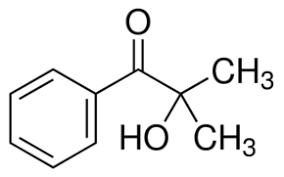
1. Photoinitiator 1173: The cornerstone of innovation in non-yellowing coatings
Photoinitiator 1173 (also known as Darocur 1173) is a benchmark product in the field of UV curing. Since its introduction in the 1980s, it has become a key material for high-transparency coatings such as wood, metal, and plastics due to its liquid properties and non-yellowing advantages. Its chemical structure is cleverly designed to efficiently generate active free radicals under ultraviolet light, triggering rapid polymerization of resins while avoiding the yellowing of coatings caused by residues in traditional photoinitiators.
In applications, 1173 is particularly suitable for scenarios with strict requirements on color stability, such as electronic product coatings and automotive lampshade varnishes. Its liquid form not only simplifies the formulation process, but can also be compounded with photoinitiators such as TPO to further improve the curing efficiency. However, it should be noted that its photolysis products may produce a slight odor, so low-migration derivative technology is required in sensitive areas such as food packaging.
2. Technical advantages and multi-field applications
1. Analysis of core advantages
- Non-yellowing performance: Through the optimization of molecular structure, 1173 has almost no color change after curing, which is particularly suitable for outdoor coatings exposed to sunlight for a long time.
- Compatibility and safety: It is soluble in solvents such as acrylates and toluene, and is compatible with a variety of resin systems; its low volatility and toxicity classification (acute oral toxicity category 4) make it more popular in industrial applications.
2. Application scenario expansion
- Coatings and inks: In wood varnishes and PCB solder mask inks, 1173 significantly improves the curing depth and speed by compounding photosensitizers (such as ITX).
- High-precision materials: When used for highly transparent materials such as PADC (polyallyl diglycol carbonate), its conversion rate and hardness are excellent, supporting the precision manufacturing of medical devices and optical components.
3. Market structure and competitive technology dynamics
The global photoinitiator market is highly concentrated. International giants such as BASF and IGM Resins dominate technology research and development, while domestic companies such as Jiuri New Materials accelerate market penetration through localized production. Competitive products:
- TPO: Faster curing speed, but higher risk of yellowing, suitable for thick coating scenarios.
- Irgacure 184: Designed for white systems, it needs to be compounded with other initiators to balance performance.
It is worth noting that improved versions such as the new P-1173 have achieved breakthroughs between curing efficiency and environmental protection by optimizing molecular design, becoming an important direction for future technology upgrades.
4. Technical challenges and innovations under environmental protection trends
1. Upgrade of regulatory requirements
The EU's restrictions on the migration of photoinitiators in food packaging (such as benzophenone ≤ 0.6 mg/kg) have promoted the industry's transformation to low-migration and low-toxicity products. Although China has not yet issued mandatory standards, the SN/T testing framework has provided guidance for industry self-discipline.
2. Green technology breakthroughs
- Macromolecular photoinitiators: By increasing the molecular weight or introducing polymerizable groups, the migration of small molecule residues is reduced, such as the application of hyperbranched polymer derivatives.
- Dual curing system: Combining UV curing and thermal curing technologies, it solves the curing efficiency problem of water-based UV resins caused by the presence of water, and expands its application in high-end fields such as automotive coatings.
V. Future Outlook: From High Efficiency to Sustainability
The success of photoinitiator 1173 confirms the dual value of UV curing technology in environmental protection and efficiency. With the maturity of technologies such as water-based UV resins and UV-LED light sources, the industry is moving towards lower energy consumption and less VOCs emissions. At the same time, emerging demands such as food-grade inks and medical-grade adhesives will further promote the upgrading of photoinitiators to high safety and functionality.
Photoinitiator 1173 is not only a milestone in UV curing technology, but also a catalyst for industrial upgrading. Driven by environmental regulations and technological innovation, its application boundaries will continue to expand, providing more efficient green solutions for coatings, electronics, packaging and other industries.