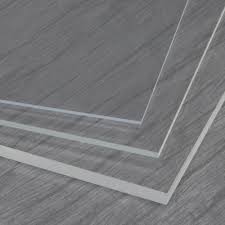
PMMA (polymethyl methacrylate), also known as acrylic or organic glass, is a thermoplastic with excellent transparency and strong weather resistance. Due to its high light transmittance, light weight and easy processing, PMMA materials are widely used in optical devices, display screens, car lampshades, architectural decoration and other fields. However, the low polarity and smoothness of the PMMA surface make it face the problem of insufficient adhesion when combined with other materials (such as resins). This article will explore the characteristics of PMMA materials, adhesion challenges, and how to achieve efficient bonding through special resins.
1. Characteristics and adhesion challenges of PMMA materials
PMMA materials have the following core characteristics:
High transparency: light transmittance is as high as 92%, which is better than ordinary glass.
Weather resistance: strong UV resistance, suitable for outdoor use.
Low surface energy: low surface polarity (surface tension is about 39-40 mN/m), which makes it difficult for resins, coatings or adhesives to adhere effectively.
Smooth surface: lack of microscopic roughness structure, further reducing the mechanical bite force.
Consequences of insufficient adhesion:
The coating or adhesive layer is easy to peel off, affecting the appearance and functionality of the product.
Low bonding strength leads to assembly failure or poor sealing.
Interface peeling is accelerated due to environmental factors (humidity, temperature) during long-term use.
2. Key technologies for improving the adhesion of PMMA materials
To overcome the adhesion problem of PMMA materials, it is necessary to start from three aspects: surface treatment, special resin selection and process optimization:
1. PMMA surface treatment technology
Plasma treatment: By bombarding the PMMA surface with plasma, polar groups (such as hydroxyl and carboxyl) are introduced and a microscopic rough structure is formed, which significantly improves the surface energy and enhances the chemical bonding and mechanical bite with the resin.
Flame treatment: The surface is heated briefly by flame to oxidize and generate polar groups, which is suitable for large-area PMMA sheets.
Chemical primer: Apply a primer containing silane coupling agent or polyurethane to form a "bridge" between PMMA and resin to improve interface compatibility.
2. Selection of special resins
The low surface energy characteristics of PMMA materials require the use of specific resins to achieve efficient adhesion:
Acrylic resin: It has a similar chemical structure to PMMA, has excellent compatibility, and can form a strong chemical bond.
Epoxy resin: By adding an adhesion promoter (such as a silane coupling agent), the bonding strength with PMMA can be significantly improved.
Polyurethane resin (PU): has excellent flexibility and bonding properties, suitable for applications that require impact resistance.
UV curing resin: quickly cures through ultraviolet light, suitable for high-precision fields such as optical devices.
3. Application scenarios of PMMA combined with special resins
Optical devices:
Display screen protection layer: PMMA panel is coated with UV curing resin to improve wear resistance and scratch resistance.
Lens bonding: Use acrylic resin to fix PMMA lens to ensure optical performance and durability.
Automotive industry:
Lamp cover coating: PMMA lamp cover is coated with weather-resistant polyurethane resin to improve UV resistance and impact resistance.
Interior parts bonding: Use modified epoxy resin to fix PMMA decorative panel, which is resistant to high temperature and vibration.
Architectural decoration:
Acrylic sheet coating: Coated with weather-resistant acrylic resin to improve durability for outdoor use.
PMMA materials are widely used in many fields due to their excellent transparency and weather resistance. However, their low surface energy and smooth surface characteristics pose a severe challenge to adhesion. Through surface treatment, special resin selection and process optimization, the bonding strength between PMMA and resin can be significantly improved. Shenzhen U-Sunny Technology focuses on serving customers and launches resins and monomers with very good adhesion to PMMA.