


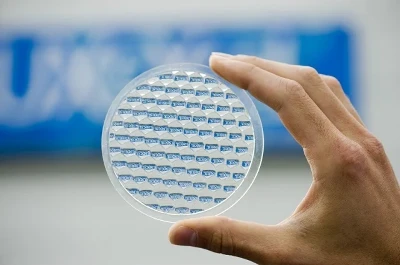
The advent of 3D-printed optical components has unlocked unprecedented design freedom and functional integration in industries ranging from AR/VR to automotive sensors. Unlike traditional subtractive methods, additive manufacturing enables complex geometries, reduced material waste, and multi-functional optical systems-such as combining lenses, mounts, and baffles in a single print (#user-content-fn-1). This innovation is particularly transformative for applications demanding miniaturization, lightweight designs, and rapid prototyping.
Material Breakthrough: U-Sunny's T-6600 High-Refractive-Index Resin
At the heart of high-performance 3D-printed optics lies advanced materials. Shenzhen U-Sunny (优阳科技), a leader in UV-curable resins, has developed the T-6600 resin, a game-changer for optical applications. Key features include:
Ultra-High Refractive Index (n<sub>D</sub> >1.63): Reduces lens thickness while maintaining optical clarity, ideal for AR/VR near-eye displays and smartphone lenses (#user-content-fn-12).
Low Shrinkage (<3%): Ensures dimensional stability for precision micro-optics and waveguides (#user-content-fn-14).
Rapid Curing (<30 seconds under 365nm UV): Accelerates production cycles by 40% compared to conventional resins.
Thermal Resistance (up to 200°C): Suitable for automotive LiDAR sensors and industrial-grade optical systems.
Applications Redefined
AR/VR and Wearables: T-6600's low dispersion and high light transmission (>98%) minimize Fresnel reflections, enhancing visual fidelity in headsets (#user-content-fn-12).
5G and Fiber Optics: The resin's compatibility with silica substrates enables protective coatings for high-speed communication modules, reducing signal attenuation (#user-content-fn-14).
Automotive LiDAR: Printed optics with integrated mounts withstand thermal cycling, ensuring reliability in autonomous vehicles.
Overcoming Traditional Limitations
Early 3D-printed optics faced challenges like layer delamination and surface roughness. U-Sunny's T-6600 addresses these through:
Precision Material Flow: UV-curable droplets merge seamlessly before curing, minimizing voids (#user-content-fn-3).
Hybrid Organic-Inorganic Formulation: Enhances mechanical strength and reduces post-processing.
Conclusion
As industries push toward smarter, lighter optical solutions, 3D printing paired with advanced materials like U-Sunny's T-6600 resin is redefining what's possible. From foldable OLED screens to next-gen photonics, the synergy of additive manufacturing and high-refractive-index polymers promises a brighter, more precise future.