


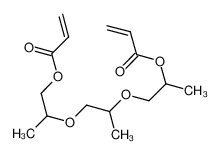
In the field of radiation curing technology in the chemical industry, TPGDA Monomer (tripropylene glycol diacrylate) has become the core raw material for coatings, inks, adhesives and other industries due to its unique chemical properties. As the core component of AM-321 products under Shenzhen U-Sunny, TPGDA not only promotes the upgrading of green industrial technology, but also achieves an innovative balance between performance and environmental protection.
1. Technical characteristics and chemical advantages of TPGDA
TPGDA is a bifunctional acrylate monomer with a molecular formula of C₁₅H₂₄O₆. It has the characteristics of low viscosity (density 1.030g/cm³ at 25°C), high reactivity and low volatility. The acrylate group in its molecular structure can quickly initiate polymerization under ultraviolet light (UV) or electron beam (EB) irradiation to form a highly cross-linked cured material. This characteristic makes it perform well in the following scenarios:
High-efficiency active diluent: replaces traditional solvents, reduces the viscosity of the resin system, and participates in the cross-linking reaction to improve the flexibility and adhesion of the coating.
Low-energy curing: reduces the radiation dose requirement by 30%-50%, suitable for the production of energy-saving UV coatings and inks.
Environmental friendliness: does not contain volatile organic compounds (VOCs) and complies with environmental regulations such as EU REACH.
2. Multi-dimensional application of TPGDA in the industrial field
Coating industry: In wood paint and plastic coating, TPGDA as an active diluent can significantly improve leveling and scratch resistance. For example, Shenzhen Youyang's AM-321 UV nail polish uses TPGDA technology to achieve rapid curing and low skin irritation at high film thickness.
Ink manufacturing: TPGDA can reduce the viscosity of offset ink by 20%-40% and enhance the dispersion stability of pigments. Studies have shown that its linear molecular structure is more conducive to reducing the viscosity and shear stress of ink than TMPTA (trimethylolpropane triacrylate).
Adhesives and electronic materials: As a cross-linking agent for photoresists and solder mask inks, TPGDA can improve the high temperature resistance (Tg>105℃) and acid and alkali corrosion resistance of PCB boards.
3. Market trends and Shenzhen U-Sunny's innovative practices
According to the "2021-2026 China TPGDA Industry Market Research Report", the scale of China's radiation-curing monomer market has reached 4.53 billion yuan (2020), of which TPGDA accounts for 23.2%, second only to TMPTA. In the future, the industry will upgrade to high-end and environmentally friendly:
High purity demand: The purity of electronic-grade TPGDA needs to reach more than 99.9% to adapt to high-precision scenarios such as semiconductor packaging.
Improved biocompatibility: Reduce skin irritation through molecular structure modification and expand to new fields such as medical adhesives.
Shenzhen U-Sunny's AM-321 product is a model of this trend. It uses TPGDA as the core raw material, combined with self-developed low-energy curing technology, and has achieved commercial breakthroughs in consumer fields such as UV nail polish and 3D printing resin. The products have been exported to more than 20 countries including the United Kingdom and Japan.
4. The technical value of choosing TPGDA and AM-321
For chemical companies, TPGDA is not only a "catalyst" to improve product performance, but also the key to achieving green transformation. U-Sunny provides customers with the following advantages through the technical solution of AM-321:
Customized service: Adjust the TPGDA ratio according to parameters such as coating viscosity and curing speed.
Supply chain stability: Large-scale production ensures batch consistency, with an annual production capacity of 100,000 tons.
Technical support: Provide a full-process solution from formula design to process optimization.