


Introduction:
In the realm of advanced manufacturing and material science, the development of flexible and versatile materials has become increasingly important. One of the key areas where this innovation is evident is in the use of soft-cure UV resins, particularly those with low refractive indices such as the T-6139 fluorinated UV resin developed by companies like Shenzhen Youyang (优阳) and U-Sunny. These resins are designed to meet the specific requirements of flexible optical layers, offering a blend of performance and adaptability.
Advantages of Soft-Cure UV Resins:
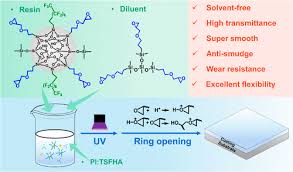
Soft-cure UV resins are known for their rapid curing capabilities and flexibility. They are typically used in applications where high precision, low shrinkage, and excellent optical properties are required. For instance, the T-6139 resin, a fluorinated low-refractive index UV resin, is tailored to provide superior adhesion, low viscosity, and outstanding optical clarity . This makes it ideal for applications involving thin films, flexible displays, and other optical components where traditional materials might fall short.
Applications in Flexible Optical Layers:
Flexible optical layers are critical in modern technologies such as flexible displays, augmented reality (AR) devices, and wearable electronics. Soft-cure UV resins like T-6139 offer several advantages:
High Flexibility and Low Shrinkage: The resin's ability to maintain its shape and integrity under various mechanical stresses ensures that the optical layers remain stable and functional over time .
Low Refractive Index: The low refractive index of T-6139 minimizes light scattering and enhances the overall optical performance of the layers .
Easy Processing: The soft-cure nature of these resins allows for precise application and curing, which is essential for creating intricate patterns and structures on flexible substrates .
Technical Specifications:
The T-6139 resin is formulated using advanced fluorinated compounds, which improve its chemical resistance and environmental stability . It also features a high degree of transparency and excellent scratch resistance, making it suitable for applications requiring high durability and longevity . Additionally, its compatibility with UV light sources ensures quick and efficient curing processes, which are crucial for high-volume production .
Conclusion:
Soft-cure UV resins like the T-6139 fluorinated low-refractive index resin represent a significant advancement in the field of flexible optical layers. Their unique properties make them an indispensable material in the development of innovative technologies. As the demand for flexible and high-performance optical components continues to grow, the role of such resins will only become more prominent.