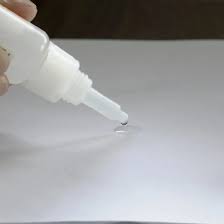
As a high-performance adhesive material, strong bonding resin plays an important role in the electronics, automotive, construction and packaging industries. Its excellent bonding performance, environmental resistance and long-term stability make it the material of choice for many high-end applications. This article will explore the core characteristics of strong bonding resin, including its advantages of non-yellowing, resistance to cold and hot shocks and good hydrolysis resistance, and demonstrate its wide application in different fields.
Core features of strong bonding resin
No yellowing
Strong adhesive resins can maintain transparency and color stability even when exposed to UV or high temperature for a long time. This feature makes it very suitable for use in fields with high aesthetic requirements such as outdoor advertising, architectural glass and electronic display screens.
Resistant to cold and hot shocks
Strong adhesive resins can maintain stable performance under extreme temperature changes. Whether it is a high or low temperature environment, its bonding strength will not be affected, ensuring the reliability of the product in complex environments.
Good hydrolysis resistance
Strong adhesive resins show excellent hydrolysis resistance in humid or aqueous environments. This feature makes it have a wide range of application prospects in fields that are susceptible to moisture, such as automobiles, ships and outdoor equipment.
Our resin is a strong adhesive resin with strong bonding ability, no yellowing, resistance to cold and heat shock, and good hydrolysis resistance. It is used as the main resin for coating and bonding of plastic sheets, various film materials and metal materials. It can maintain excellent bonding ability and elasticity when cured under anaerobic conditions. The cured coating can also maintain stable adhesion under continuous high temperature conditions. It is resistant to moisture and heat, and the adhesive layer will not hydrolyze or turn white.
UV adhesive: used for bonding and coating of PC, PS, acrylic and other sheets, PET, OPP films and other materials, and lamination bonding of metal and plastic materials.
UV coating: used as a combination in coatings and ink formulas to improve flexibility, and in vacuum coating primer formulas to enhance the adhesion between various metal coatings. High flexibility will not reduce the coating's resistance to water boiling.