


Cyclic Trimethylopropane Formal (CTF), a versatile chemical intermediate, plays a pivotal role in the synthesis of high-performance materials for industries such as coatings, inks, and adhesives. As a leading product in this domain, Shenzhen U-Sunny's AM-313 exemplifies innovation and efficiency in UV-curable systems. This article explores the synthesis methods, industrial applications, and market trends of CTF-based products, with a focus on AM-313's unique advantages.
What Is Cyclic Trimethylopropane Formal?
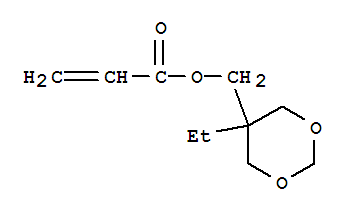
Cyclic Trimethylopropane Formal (CTF) is a cyclic ester derived from trimethylolpropane, widely recognized for its role as a UV-reactive monomer. With a molecular formula of C10H16O4 and a molecular weight of 200.23, CTF exhibits low viscosity (10–25 cps at 25°C), high purity (≥99%), and excellent chemical stability . Its synthesis typically involves acid-catalyzed dissociation of trimethylolpropane production residues, achieving a yield exceeding 90% and purity above 98.5% after distillation .
Key Properties of U-Sunny's AM-313
Shenzhen U-Sunny's AM-313, a CTF-based acrylate monomer, is engineered for UV-curable applications. Key features include:
Rapid curing: Enables fast production cycles in coatings and inks.
Low volatility and odor: Ideal for environmentally sensitive settings.
Exceptional adhesion: Performs well on plastics, metals, and composite substrates .
High durability: Resists yellowing, abrasion, and chemical exposure .
With a glass transition temperature (Tg) of 32°C and a refractive index of 1.462, AM-313 ensures balanced flexibility and optical clarity in end products .
Industrial Applications of CTF and AM-313
1. Coatings
CTF-based formulations, such as AM-313, reduce shrinkage during UV curing, enhancing adhesion and mechanical strength. They are widely used in automotive, electronics, and industrial coatings for their resistance to water and solvents .
2. Inks
In UV-curable inks, AM-313's low viscosity (13 cP at 25°C) improves printability and color retention. Its compatibility with cationic and hybrid curing systems supports high-resolution printing on diverse substrates .
3. Adhesives
CTF enhances the crosslinking density of adhesives, ensuring strong bonds under thermal or mechanical stress. AM-313's low hydroxyl value (<2 mg KOH/g) minimizes moisture sensitivity, critical for packaging and construction adhesives .
Market Trends and Growth Projections
The global CTF market is projected to grow at a CAGR of 4.0% from 2024 to 2030, driven by demand in Asia-Pacific regions for eco-friendly coatings and adhesives . Shenzhen U-Sunny capitalizes on this trend by optimizing AM-313's production efficiency and sustainability, aligning with industrial shifts toward green chemistry.
Why Choose U-Sunny's AM-313?
Technical superiority: Combines rapid curing with minimal environmental impact.
Custom solutions: Tailored formulations for specific applications in UV coatings, inks, and adhesives.
Quality assurance: Complies with international standards (CAS 66492-51-1, EINECS 266-380-7) .
Conclusion
The synthesis of Cyclic Trimethylopropane Formal and its derivatives like AM-313 underscores advancements in UV-curable technologies. For industries prioritizing durability, efficiency, and sustainability, U-Sunny's AM-313 offers a reliable solution. As market demand grows, leveraging CTF-based products will remain critical for innovation in coatings, inks, and adhesives.