


In the field of optical materials, low refractive index diluent monomers are the core raw materials for preparing high-performance coatings, optical fiber claddings and optical films. Its refractive index (n<1.45) characteristics can significantly reduce optical signal loss and improve transmittance and mechanical stability. This article will focus on analyzing the innovative value of Shenzhen U-Sunny's LM-301 low refractive index monomer from the perspective of technical advantages, application scenarios and market trends.
Technical advantages: Breakthrough design of fluorinated monomers
The performance of low refractive index monomers depends on the molecular structure design, especially the degree of fluorination. For example, hexafluoroisopropyl acrylate (n=1.38) and heptadecafluorodecyl methacrylate (n=1.35) achieve low refractive index through high fluorination, and have both hydrophobicity and low surface energy, which are suitable for optical components in harsh environments. Shenzhen Youyang's LM-301 is further optimized on this basis. Its refractive index can be as low as 1.34-1.38, the transmittance exceeds 90%, and it has excellent adhesion to silicon-based materials, which is suitable for optical fiber coatings and high-power laser systems. In addition, LM-301 uses UV curing technology, and the curing shrinkage rate is close to zero, avoiding the problem of micro cracks caused by coating stress.
Core application scenarios
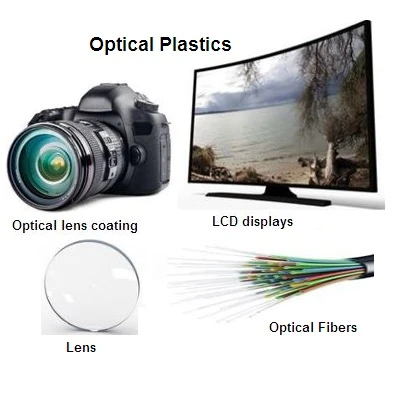
Fiber coating: The refractive index of the inner coating of traditional optical fibers needs to be lower than that of the cladding material (such as quartz n=1.46). LM-301 can accurately control the refractive index to the range of 1.35-1.40 by adjusting the length of the fluorinated chain, meeting the bending resistance requirements of double-clad gain fibers, while being compatible with high numerical aperture (NA≥0.46) designs.
Optical films and lenses: In liquid crystal display backlight modules, low refractive index monomers can reduce light scattering and improve brightness uniformity. Combined with Shenzhen Youyang's patented formula, LM-301 can be used in conjunction with high refractive index resins (n>1.6) to achieve multi-layer composite optical structures.
Packaging materials: For LED and photovoltaic modules, the low refractive index characteristics of LM-301 can reduce interface reflection losses, and combined with its high temperature resistance (long-term tolerance to 220°C), it is suitable for COB packaging and anti-reflection film preparation.
Market competitiveness and local innovation
According to the "2024-2030 Global and China Low Refractive Index Lens Monomer Market Research Report", Chinese local companies are accelerating breakthroughs in the field of high value-added optical materials. Shenzhen Youyang has broken the monopoly of foreign brands in the low refractive index monomer market with products such as LM-301, and its technical indicators are comparable to international competitors (such as Luvantix PC series). The product has passed multiple reliability tests, including 100 kpsi mechanical strength and moisture and heat cycle resistance certification, and is suitable for high-end fields such as 5G communications, aerospace, etc.
Conclusion
The launch of Shenzhen Youyang LM-301 low refractive index diluent monomer marks an important progress in the process of China's optical material autonomy. In the future, with the outbreak of emerging demands such as AR/VR and LiDAR, monomer technology with low refractive index, high light transmittance and strong adhesion will continue to lead industry innovation. Enterprises can further expand their application boundaries in medical testing, smart sensing and other scenarios through customized formulation services.