


1. Industry pain points and technical breakthroughs of oxygen inhibition
1. Deep impact of oxygen inhibition
Nail art: After curing, the surface of traditional UV nail paint becomes sticky and needs to be wiped with alcohol, which damages the nail cuticle and easily causes allergies.
Industrial scenario: Pressure-sensitive adhesive labels are not completely cured under low-energy UV lamps, resulting in a decrease in adhesion (peel strength <17 N/in).
2. Evolution of antioxidant and polymerization inhibition technology
The current mainstream solutions have obvious limitations:
| Method | Defects | Industrial applicability |
|---|---|---|
| High concentration initiator | Residual initiator causes accelerated yellowing | Not suitable for nail art/medical equipment |
| Nitrogen purge | High production line modification cost, energy consumption increased by 30% | Large-scale painting is feasible, label printing is limited |
| Thiol-ene system | Irritating odor, does not meet cosmetic safety standards | Industrial adhesives only |
Innovative breakthroughs of T-7118:
Dual mechanism synergistic anti-oxidation:
Cation-free radical hybrid curing: The cationic component is not inhibited by oxygen and cures deeply; the free radical component provides high-speed surface drying18.
Electron-rich monomer embedding: The molecule contains tertiary amine groups, which continuously regenerate active free radicals and offset the oxygen quenching effect1.
Low viscosity process advantage: The viscosity is only 800-1500 cps (traditional resin>3000 cps), and the fluidity is increased by 60%, which is suitable for fine nail coating and inkjet printing ink4.
2. T-7118 resin: performance advantages and multi-scenario applications
1. Nail art: double upgrade of safety and performance
Zero residue curing: completely eliminate the surface sticky layer, no need to wipe with alcohol, and avoid brittle nails.
Bionic hardness and flexibility: Shore hardness reaches 90D (close to natural nails), and there is no crack after bending 500 times, which matches the nail deformation requirements.
Biosafety certification: does not contain reproductive toxic substances such as TPO and HEMA, and has passed the EU Reach and SGS migration tests.
2. Industrial scene extension
Efficient production of UV pressure-sensitive adhesive labels:
10 seconds curing (1000 mJ/cm²), adhesive force > 72 hours (60℃/85%RH), replacing Henkel LOCTITE DURO-TAK series.
Low viscosity characteristics are suitable for the wheel coating process to reduce bubble defects.
Precision packaging of electronic devices:
Permeability fills 0.1mm micro-gap, CTE value is stable at 50 ppm/℃, solving the thermal cycle cracking of camera modules.
Degradable ink coating:
Compatible with bio-based monomers, coated on TPU packaging film with biomass content >40%, supporting ink-substrate synergistic degradation.
3. Technology extension: Collaborative innovation from nail art to industrial adhesives
1. Nail art process innovation
One-step high-gloss coating: single coating achieves mirror gloss (gloss > 95°), wear resistance is improved to > 2 weeks, and customer repurchase rate increases by 30%.
Low-temperature curing adaptability: Completely cured under low energy of LED nail lamp (405nm), solving the limitation of home nail art DIY equipment.
2. Industrial bonding functional breakthrough
UV-moisture dual curing extension: After light exposure, it absorbs environmental moisture to deepen cross-linking, which is suitable for high-humidity environments such as medical device packaging.
Nano-antioxidant synergistic system: Add cerium oxide nanoparticles to increase the yellowing resistance level from level 4 to level 4.5 (QUV 1000h).
4. Future Direction: Greening and Intelligence
Application of Bio-based Monomers: Develop UV resins with biomass content > 60%, reducing carbon footprint by 50%.
AI Curing Prediction System: By real-time monitoring of UV intensity (UVA/UVB band) and ambient oxygen concentration, dynamically adjust light source parameters, and reduce energy consumption by 25%.
Oxygen inhibition was once an invisible barrier between light and materials, but today, T-7118 penetrates the oxygen barrier with low-viscosity flow, reshaping the curing boundary in the precise joints between the nails and the industry.
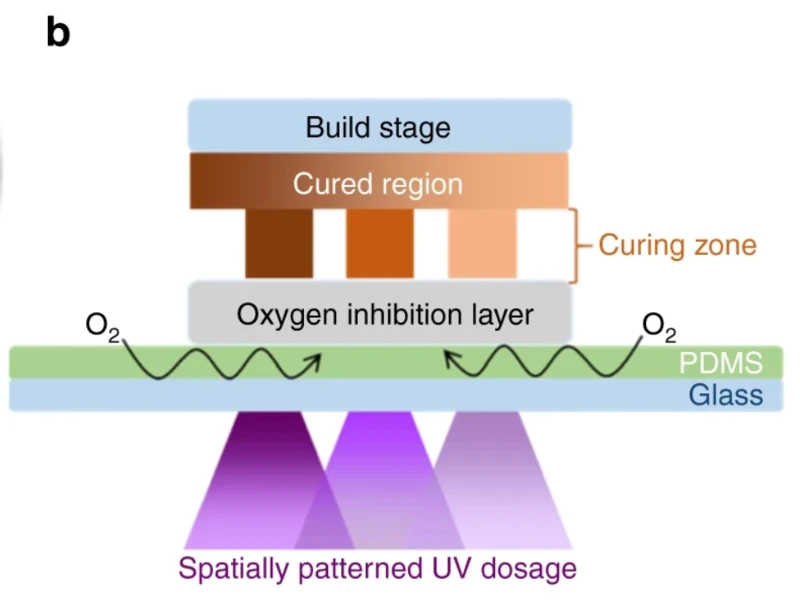
From fingertip art to bonding of all things, anti-oxidation inhibition technology is making every beam of ultraviolet light a messenger of flawless curing.
Shenzhen U-Sunny's T-7118 anti-oxidation inhibition UV resin, with safety and zero residue, industrial-grade toughness, and full-domain adaptation as the core, provides high-performance basic materials for nail topcoats, pressure-sensitive adhesives, and electronic inks, and promotes green manufacturing upgrades.