


Introduction
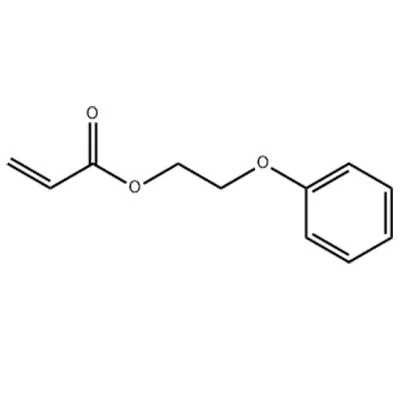
2-Phenoxy ethyl acrylate (PHEA) is a versatile monomer widely used in UV-curable coatings, inks, adhesives, and other specialty chemical formulations. With the global UV coatings market projected to reach USD 7.47 billion by 2035 (CAGR 5.2%) , demand for high-performance additives like PHEA is surging. This article explores the chemical properties, industrial applications, and market significance of PHEA, with a focus on Shenzhen U-Sunny's AM-311, a leading product in this sector.
Chemical Properties of 2-Phenoxy Ethyl Acrylate
PHEA (CAS 48145-04-6) is an acrylate ester with a molecular formula of C11H12O3 and a molecular weight of 192.21 g/mol. Key characteristics include:
Low viscosity (5–15 cps at 25°C), ideal for diluting oligomers and adjusting formulation viscosity .
High refractive index (1.516), enhancing optical clarity in coatings and adhesives .
Low acid value (≤0.5 mg KOH/g) and excellent hydrophobicity, improving water resistance and shelf stability .
Fast curing speed and low shrinkage, critical for precision applications like electronics encapsulation .
These properties make PHEA a cornerstone in UV formulations, balancing performance, cost-effectiveness, and environmental compliance.
Applications in UV Coatings, Inks, and Adhesives
1. UV Coatings
PHEA acts as a reactive diluent, reducing viscosity while enhancing adhesion to substrates like metals, plastics, and PET films. Its low skin irritation and minimal odor make it suitable for consumer-facing products, including automotive finishes and electronic device coatings .
2. Printing Inks
In UV-curable inks, PHEA ensures rapid curing under UV light, reducing energy consumption. It is particularly effective in flexographic and screen inks, offering high color retention and chemical resistance .
3. Adhesives
PHEA-based adhesives exhibit strong bonding to untreated PET and flexibility, making them ideal for optical photovoltaic (OPV) encapsulation. Studies highlight its low water vapor transmission rate (WVTR) and compatibility with high-speed production lines .
U-Sunny's AM-311: A Benchmark in UV Monomer Innovation
Shenzhen U-Sunny's AM-311 PHEA stands out for its:
Optimized refractive index (1.516), crucial for optical adhesives and coatings .
Balanced Tg (5°C) and dilution efficiency, ensuring compatibility with diverse resin systems .
Low irritation profile, aligning with EU REACH and FDA safety standards .
As a key component in U-Sunny's Trust Series, AM-311 is widely adopted in automotive, electronics, and packaging industries, reflecting the company's 20+ years of expertise in UV/EB curing technologies .
Market Trends and Sustainability Drivers
The UV coatings industry is driven by:
Eco-friendly regulations: Low-VOC UV formulations reduce environmental impact .
Automotive and electronics growth: UV coatings for car interiors and smartphone screens are projected to grow at 5.9% CAGR through 2033 .
Technological advancements: U-Sunny's R&D focuses on high-refractive-index resins and low-energy-curing monomers to meet evolving demands .
Conclusion
2-Phenoxy ethyl acrylate is indispensable in modern UV formulations, offering unmatched versatility and performance. U-Sunny's AM-311 exemplifies how innovation in monomer design can address industrial challenges while adhering to sustainability goals. For manufacturers seeking reliable, high-quality UV solutions, AM-311 remains a top choice in coatings, inks, and adhesives.