


The bonding of metal materials is crucial in the electronics, automotive, precision manufacturing and other industries, but traditional methods often have pain points such as slow curing, insufficient strength or complex processes. UV curing technology has brought innovation to metal bonding, and the T-7131 UV curing resin launched by Shenzhen U-Sunny is a reliable choice in this field.
Special challenges of metal bonding
Metal bonding is not an easy task. Metal surfaces are usually smooth and dense, making it difficult to form effective adhesion; many application environments require the bonding point to withstand temperature changes, chemical corrosion or mechanical stress; at the same time, the pursuit of efficiency in modern production lines also requires the bonding process to be as fast and simple as possible. These challenges have given rise to the need for efficient solutions.
Advantages of UV-curable resins
Instantaneous curing efficiency: Under the irradiation of ultraviolet rays of a specific wavelength, the resin is cured within seconds, greatly shortening the production cycle.
Strong bonding performance: Excellent adhesion to the metal surface, providing reliable bonding strength.
Good process adaptability: Suitable for automated dispensing and assembly line production, improving overall efficiency.
Environmental characteristics: No solvent, low VOC emissions, more in line with modern environmental protection requirements.
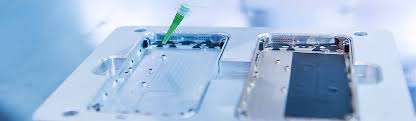
U-Sunny T-7131: Designed for metal bonding
The T-7131 UV curing resin developed by Shenzhen U-Sunny is specially developed to meet the bonding challenges of various metal substrates (such as stainless steel, aluminum alloy, copper, etc.):
Excellent metal adhesion: The formula design gives priority to the surface characteristics of the metal to achieve strong and lasting bonding effects.
Fast deep curing: The photoinitiator system is optimized to ensure rapid surface drying while achieving full deep curing.
Excellent weather resistance: After curing, the adhesive layer can withstand temperature fluctuations, humid environments and various chemical media to ensure long-term reliability.
Good process performance: Moderate viscosity, easy dispensing and coating operations, meeting the needs of precision or large-area bonding.
Typical application scenarios
Electronic appliances: assembly of precision metal parts, sensor packaging, FPC/PCB fixing.
Automotive industry: bonding of small metal parts, fixing of interior parts, assembly of headlights.
Metal processing: nameplate pasting, installation of metal decorative parts, temporary fixing of fixtures.
Jewelry repair: efficient and precise repair of precious metals (gold and silver).
Industrial maintenance: filling and sealing of cracks in metal parts.
Technical points for using T-7131
Surface treatment: Before bonding, be sure to clean the metal surface to remove oil, oxides or release agents. It is recommended to use a special cleaning agent.
Glue coating thickness: It is recommended to control the thickness of the glue layer to obtain the best curing effect and strength.
Ultraviolet light source: Select a UV light source with a suitable wavelength (usually 365nm) and sufficient intensity to ensure uniform and sufficient irradiation.
Operating environment: Avoid direct strong light on uncured glue.
Choose Shenzhen U-Sunny, choose professional support
As an electronic chemical supplier rooted in Shenzhen, U-Sunny focuses on the research and development and production of high-performance adhesive materials. T-7131 UV curing resin is the result of our unremitting pursuit of quality. We provide:
Stable and reliable product supply
If you are looking for a fast, strong and process-friendly metal bonding solution, U-Sunny T-7131 UV curing resin is worthy of your attention. It is designed to meet metal bonding challenges and is committed to improving your production efficiency and product reliability.
Welcome to contact us to learn more about the technical details of T-7131, or apply for free samples for testing. Let Shenzhen U-Sunny become your trusted bonding partner.