


1. Industry Trends: Bio-based, Degradable and Composite Curing Technology
Bio-based and recycled materials lead TPU upgrades
Well-known companies have launched TPU materials containing 30%-100% recycled content, combined with mass balance certification, significantly reducing carbon emissions by 70%. Such materials rely on high-performance UV adhesives to achieve surface coating and compounding, ensuring that mechanical properties are not lost in the bonding of consumer products such as mobile phone cases and sports shoes.
Degradable UV pressure-sensitive adhesive breaks through packaging bottleneck
Traditional pressure-sensitive adhesives are hindered from recycling due to their inability to degrade, but the company recently invented polyurethane pressure-sensitive adhesives to achieve a breakthrough: biomass content reaches 45%, and the 60-day biodegradation rate exceeds 60% (in line with JIS K 6953-1 standard). This type of adhesive is suitable for food packaging and agricultural film labels, promoting the recycling of PVC/TPU substrates.
Photothermal dual curing solves the problem of deep curing
The curing thickness of conventional UV resins is limited to 0.6-1.3cm, and thick-walled TPU/PVC parts are prone to "shadow areas" that are not cured. The industry has developed a light-heat dual curing system to activate a secondary thermal reaction after UV irradiation, completely eliminating blind spots in non-light-transmitting areas.
2. U-Sunny T-7080: UV resin designed for strong bonding of TPU/PVC
The T-7080 strong and tough UV resin launched by Shenzhen U-Sunny aims at the pain points of easy cracking and poor weather resistance of flexible substrates, and achieves performance breakthroughs through molecular structure innovation:
Super strong flexibility and peeling resistance:
The modified polyurethane acrylate segment gives a breaking elongation of >150%, which is much higher than ordinary acrylate resin (about 50%), perfectly matching the deformation requirements of TPU/PVC, and there is no risk of degumming in the bending of sports shoes and the stretching of cable sheaths.
Yellowing resistance and weathering resistance upgrade:
The aliphatic curing system is adopted, and the yellowing resistance level 4 test (level 5 is the highest) is passed to avoid the yellowing and failure of traditional aromatic UV resins during outdoor use. Combined with the low outgassing characteristics of UV adhesives (<1%), it is suitable for high-demand scenes such as automotive interiors.
Broad spectrum substrate adaptability:
High-strength bonding can be achieved for both non-polar PVC and polar TPU, forming an interpenetrating network with the substrate through hydrogen bonds, with a shear strength of more than 15MPa. It is also compatible with solvent coating and inkjet printing processes, and is suitable for the diversified production needs of inks and pressure-sensitive adhesives.
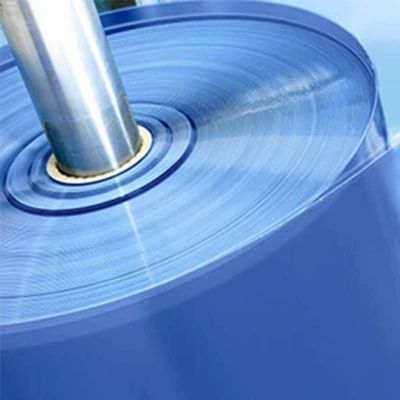
3. Core application scenarios: from industrial pressure-sensitive adhesive to electronic packaging
Industrial pressure-sensitive adhesive labels and film composites
As an upgraded alternative to pressure-sensitive adhesives, T-7080 can be cured within 10 seconds under UV irradiation, significantly improving the efficiency of label production lines. Its adhesion on PVC film is >72 hours, and it can withstand high temperature and high humidity environments at 60°C.
UV packaging and stress buffering of electronic devices
For TPU/PVC bonding of micro-electronic parts such as camera modules and speakers, the expansion coefficient (CTE) of T-7080 is stable at 50ppm/°C (after filler modification), avoiding cracking caused by hot and cold cycles. In scenarios with low transmittance requirements, delayed curing agents can be used to achieve bonding in shadow areas.
Environmentally friendly packaging inks and degradable coatings
Combined with biodegradable technology, when T-7080-based inks are applied to TPU packaging films, the biomass content can reach more than 40%, and through the ink-substrate synergistic degradation design, it meets the requirements of the EU packaging directive.
4. Future Direction: Functional Resins and Intelligent Manufacturing
The next generation of UV resins needs to have both the elasticity of thermoplastic polyurethane and the efficiency of light curing, for example:
Developing UV-moisture dual-curing systems to continuously absorb environmental moisture after light exposure to deepen crosslinking;
Embedding nano-thermal conductive fillers (such as boron nitride) to improve the heat dissipation capacity of the adhesive layer of high-power devices.
Conclusion
The sustainable application of TPU and PVC cannot be separated from the innovative support of UV curing resin. U-Sunny T-7080, with its strong toughness, yellowing resistance and wide adaptability, redefines the standards for TPU/PVC bonding and coating, and provides adhesive, pressure-sensitive adhesive and ink manufacturers with solutions that combine performance and environmental protection.