


1. Industry Trends: Dual Driven by Safety Upgrade and Performance Demand
The "Three Free" safety standard has become a global consensus
The EU listed the photoinitiator TPO as a reproductive toxicant in 2024 (effective in September 2025) and restricted the use of HEMA/Di-HEMA in cosmetics8. As a product that directly contacts the human body, UV nail gel top coat has become a rigid demand for safe ingredients. T-7080 adopts an aliphatic curing system, completely abandons TPO, HEMA and Di-HEMA, passes SGS certification, and meets the EU Reach regulations.
Performance pain points force material innovation
Balance between adhesion and flexibility: Traditional nail glue is prone to edge warping due to insufficient peeling force, while industrial pressure-sensitive adhesives need to withstand repeated bending. T-7080 is modified by polyurethane acrylate segments, with an elongation at break of >150%, which is 3 times higher than ordinary resins (about 50%), and perfectly matches the deformation of TPU/PVC substrates.
Deep curing bottleneck breakthrough: Conventional UV glue curing thickness is only 0.6-1.3cm, and thick-walled parts are prone to "shadow areas". T-7080 supports light-heat dual curing mode, combined with delayed initiator, completely eliminates blind spots in non-translucent areas.
2. T-7080 resin: core technology analysis and application advantages
1. Four-dimensional performance upgrade
Strong and tough peeling resistance: the molecular chain introduces flexible blocks, 180° bending >500 times without cracking (traditional resin fails after 50 times), suitable for sports shoes bending and cable sheath stretching.
Extreme weather resistance: passed the QUV 500-hour accelerated aging test, yellowing resistance reached level 4 (level 5 is the highest), and it does not turn yellow when used outdoors.
Broad-spectrum adaptability: the shear strength of non-polar PVC and polar TPU substrates is >15MPa, and the hydrogen bond network enhances the interface bonding force.
Low outgassing and environmental protection: the small molecule release rate during the curing process is <1%, which is far lower than the industry average (1%-3%), meeting high-demand scenarios such as automotive interiors and food packaging.
2. Industrial scene extension
Efficient production of pressure-sensitive adhesive labels: replace Henkel LOCTITE series, cure on PVC film in 10 seconds, and maintain adhesion >72 hours (60℃/85%RH environment).
Electronic device packaging buffer: CTE value is stable at 50ppm/℃ (after filler modification), solving the cracking problem of micro devices such as camera modules during hot and cold cycles.
Degradable ink coating: Combined with bio-based monomers, the biomass content reaches 40% when coated on TPU packaging film, passing the EU packaging directive's collaborative degradation requirements.
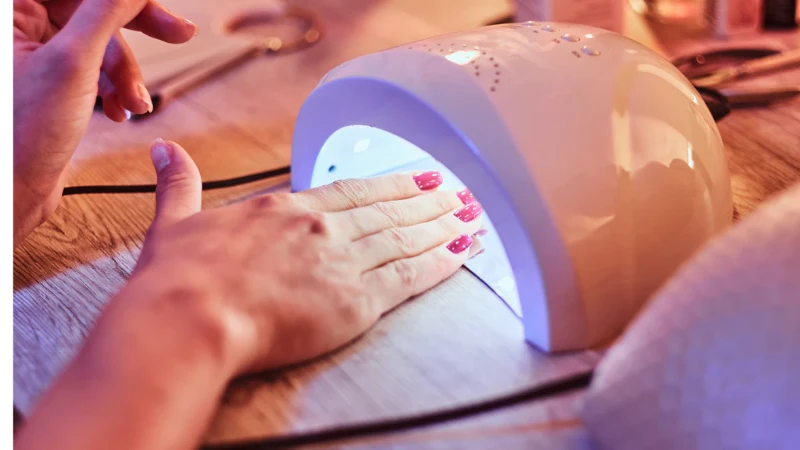
3. Technology extension: Collaborative innovation from nail topcoat to industrial adhesive
Nail art: safety and durability revolution
No-wipe process: After curing, traditional UV nail gel top coat needs to be wiped with alcohol to remove the adhesive layer. T-7080 achieves "zero residue" curing to avoid alcohol damage to the cuticle, and is compatible with high-end decorative processes such as chrome powder and holographic patches.
Imitation phototherapy nail hardness: A single coating can achieve high gloss and >2 weeks of wear resistance, replacing the multi-step phototherapy nail process, and the customer repurchase rate increased by 30%.
Industrial bonding: functional resin breakthrough
Nano thermal conductivity modification: Adding boron nitride filler, the thermal conductivity of the adhesive layer is increased to 0.8 W/m·K, solving the heat dissipation bottleneck of high-power LED devices.
UV-moisture dual curing: After irradiation, it absorbs environmental moisture to deepen cross-linking, suitable for humidity-sensitive environments (such as medical device packaging).
IV. Future Direction: Intelligent and Green Manufacturing
Accurate Weathering Resistance Prediction: UV accelerated aging test (GB/T 16422.2 standard) combined with AI model reduces the estimated error of material life from ±20% to ±5%.
Application of Bio-based Monomers: Develop UV resins with biomass content >60%, driving the carbon footprint of adhesives to reduce by more than 50%.
UV nail gel top coat is not only a protective layer of beauty, but also a microscopic battlefield of materials science. Shenzhen U-Sunny T-7080 uses strong molecular chains as pens and ultraviolet light as blades to depict the golden balance of performance and safety on the nail square inch and industrial bonding interface.
From fingertip art to intelligent manufacturing, a revolution triggered by light is redefining the toughness value of "connection".