


In the rapidly evolving field of UV-curable materials, amino-isocyanate crosslinking UV resins stand out for their exceptional chemical resistance, mechanical durability, and adaptability to advanced manufacturing. This article explores the technical advantages of this innovative chemistry and highlights Shenzhen U-Sunny's T-6141 low-refractive-index resin, a groundbreaking solution for optical and industrial applications.
1. Amino-Isocyanate Crosslinking UV Resins: Technology Overview
Amino-isocyanate crosslinking UV resins combine UV-initiated radical polymerization with post-curing reactions involving isocyanate groups. When exposed to UV light (e.g., 385 nm LED), these resins form a primary polymer network. Subsequent immersion in water or moisture triggers a secondary reaction: free isocyanate groups react with water to form urea linkages, significantly increasing crosslinking density and glass transition temperature (Tg) . Studies show that this dual-cure mechanism elevates Tg from 44°C to 130°C, enhancing thermal stability and solvent resistance .
Key benefits include:
High Chemical Resistance: Resists solvents like acetone and ethanol after post-treatment .
Non-Yellowing Transparency: Ideal for optical components and 3D-printed prototypes .
Adhesion Optimization: Reacts with polar groups on substrates (e.g., wood, plastics) for superior bonding .
2. U-Sunny's T-6141 Low-Refractive-Index Resin: Innovation in Optical Applications
Shenzhen U-Sunny, a leader in UV-curable materials with over 20 years of expertise, has developed the T-6141 fluorinated low-refractive-index (LRI) resin to address growing demands in precision optics and telecommunications.
Technical Highlights of T-6141:
Refractive Index (nD): <1.40, minimizing light scattering and reflection in optical films and fiber coatings .
UV Curing Speed: Cures within 30 seconds under 365 nm LED, compatible with high-throughput production .
Environmental Stability: Withstands extreme temperatures (up to 200°C) and humid conditions, critical for automotive LiDAR and outdoor displays .
Eco-Friendly Formulation: Zero VOC emissions, aligning with global sustainability mandates .
Applications:
Optical Films: Reduces glare and improves contrast in AR/VR lenses and flexible OLEDs .
Fiber Optics: Enhances signal transmission efficiency as a protective cladding layer .
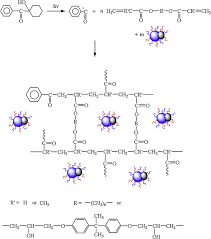
Anti-Corrosion Coatings: Combines with nanoparticles (SiO₂/TiO₂) for multifunctional surfaces in marine and aerospace sectors .
3. Market Trends and Competitive Advantages
The global low-refractive-index resin market is projected to grow at an 8.6% CAGR through 2029, driven by 5G infrastructure, smart devices, and green manufacturing . U-Sunny's T-6141 captures this momentum with:
Cost Efficiency: Low dosage requirements (8–12% in formulations) reduce material costs by 15–20% .
Customization: Adjustable viscosity and refractive index for niche applications like biomedical sensors .
R&D Leadership: Partnerships with institutes like Fraunhofer IPA ensure cutting-edge innovations, such as self-healing coatings and bio-derived monomers .
4. Why Choose U-Sunny?
ISO 9001-Certified Production: Advanced reactors and strict QC protocols ensure batch-to-batch consistency .
Global Compliance: Meets RoHS, REACH, and FDA standards for cross-regional deployments .
Technical Support: Tailored solutions for UV/EB curing systems, including hybrid formulations with acrylates or epoxies .
Conclusion
Amino-isocyanate crosslinking UV resins represent a paradigm shift in high-performance coatings, while U-Sunny's T-6141 low-refractive-index resin redefines optical material standards. By integrating dual-cure chemistry, environmental resilience, and scalable production, U-Sunny empowers industries to meet tomorrow's challenges today.