


In industries ranging from chemical manufacturing to advanced coatings, anti-static coating additives DMAA (N,N-Dimethylacrylamide) have emerged as a cornerstone for improving material safety and functionality. This article explores the technical advantages of DMAA-based solutions, with a spotlight on Shenzhen U-Sunny's AM-317, a high-performance additive tailored for coatings, inks, and adhesives.
Understanding DMAA: Mechanism and Applications
DMAA (CAS 2680-03-7) is a water-soluble, non-ionic monomer renowned for its ability to form polymers with exceptional anti-static properties. By reducing surface resistivity, DMAA minimizes static charge accumulation-a critical feature for plastics, fibers, and coatings exposed to friction or dry environments . Its unique structure enables moisture absorption, creating a conductive path that dissipates static electricity effectively .
In coatings and inks, DMAA-based additives enhance adhesion and reduce dust attraction. For example, adding 0.4–0.6% DMAA to acrylic coatings can lower surface resistivity from 10¹⁴–10¹⁵ Ω to 10¹⁰ Ω, ensuring durability in automotive and electronic applications. Similarly, in adhesives and polymer films, DMAA improves compatibility with substrates like PVC and polyurethane while maintaining optical clarity .
Shenzhen U-Sunny AM-317: Technical Excellence
Shenzhen U-Sunny's AM-317 leverages DMAA's chemistry to deliver a specialized anti-static solution for industrial coatings and composites. Key features include:
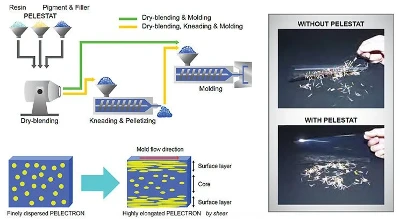
Dual Functionality: Combines internal and external anti-static mechanisms. Integrated during polymer extrusion, AM-317 migrates to the surface post-cooling, forming a moisture-responsive conductive layer. For coatings, it can also be applied topically via solvent spraying .
Environmental Compliance: Free from volatile organic compounds (VOCs), aligning with global regulations like REACH and RoHS .
Enhanced Durability: Reduces surface resistivity to 10⁶–10⁸ Ω, mitigating risks of electrostatic discharge (ESD) in electronics packaging and chemical storage.
Case studies highlight its success in:
Inks for flexible displays: Preventing static-induced print defects in smartphone and automotive screens.
Industrial adhesives: Ensuring bond stability in high-humidity environments.
Market Trends and Industry Demand
The global anti-static additives market is projected to grow at 7.5% CAGR, driven by stricter safety standards in electronics and chemicals. Key trends include:
Eco-Friendly Formulations: Demand for bio-based and low-toxicity DMAA derivatives.
Multifunctional Solutions: Integration with flame-retardant or antimicrobial additives for composite performance .
Shenzhen U-Sunny addresses these needs through AM-317's adaptability. For instance, in food-grade polyethylene films, AM-317 reduces static cling without compromising FDA compliance .
Conclusion
As industries prioritize safety and sustainability, anti-static coating additives DMAA like Shenzhen U-Sunny's AM-317 offer a strategic advantage. By combining technical innovation with regulatory compliance, AM-317 stands as a benchmark for next-generation material solutions.