


Introduction
Fiber optic coating materials are critical for protecting optical fibers from mechanical stress, environmental factors, and signal loss. These coatings, applied as protective layers during fiber drawing, ensure durability and high-speed data transmission in telecommunications and beyond . This article explores key coating technologies, performance metrics, and the groundbreaking T-6141 low-refractive-index resin by Shenzhen U-Sunny.
Types and Functions of Fiber Optic Coatings
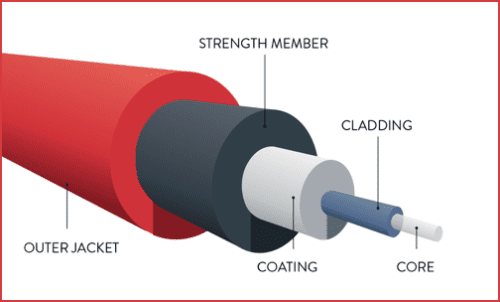
Modern optical fibers use dual-layer coatings:
Primary Coating: A soft, UV-cured urethane acrylate layer that acts as a shock absorber, minimizing microbending-induced attenuation .
Secondary Coating: A harder outer layer (e.g., acrylate or polyimide) that provides mechanical strength and resistance to moisture, chemicals, and temperature extremes .
Common materials include acrylate (flexibility), polyimide (high-temperature stability), and silicone (chemical resistance). These coatings account for 75% of a fiber's material composition, ensuring compatibility with connectors, amplifiers, and installation equipment .
Key Performance Metrics
Coatings must undergo rigorous testing:
Adhesion: Measured via peel tests to ensure long-term stability.
Thickness: Typically 10–50 μm, balancing flexibility and protection .
Environmental Resistance: Evaluated against humidity, UV exposure, and thermal cycling .
Low-Refractive-Index Resins: A Market Shift
Low-refractive-index (LRI) resins are gaining traction for reducing signal attenuation. By minimizing the refractive index difference between the fiber core and coating, LRI materials enhance light transmission efficiency over long distances . The global LRI resin market, driven by 5G and data center demand, is projected to grow significantly by 2032, with UV-curable variants dominating applications in semiconductors and optical fibers .
U-Sunny's T-6141: Advancing Fiber Optic Technology
Shenzhen U-Sunny's T-6141 fluorinated UV-curable resin exemplifies innovation in LRI coatings:
Refractive Index: 1.38–1.42, optimized for minimal light scattering .
Durability: Withstands 125°C/1.2 atm pressurized environments for 72 hours, ideal for harsh conditions .
Eco-Friendly: Solvent-free formulation reduces VOC emissions by 50%, aligning with RoHS/REACH standards .
Rapid Curing: UV-LED curing completes in <10 seconds, boosting production efficiency .
This resin is widely used in telecommunications, aerospace, and marine optics, where corrosion resistance and signal integrity are paramount .
Competitive Landscape
While global players like DSM and JSR dominate the coating market, U-Sunny's T-6141 stands out for its technical edge. Domestic competitors, such as Feikai Materials, hold 60% of China's UV-coating market but lag in LRI specialization .
Conclusion
Fiber optic coating materials are pivotal to the future of high-speed communication. Innovations like U-Sunny's T-6141 low-index resin address critical challenges in signal loss and environmental resilience. As demand for reliable data transmission grows, advanced coatings will remain central to optical network evolution.