


Flexible display substrates are the core materials of flexible electronic technology. By replacing traditional glass substrates with bendable plastic or metal substrates, display devices can be made lightweight, drop-resistant and have diversified designs. It is predicted that the global flexible display technology market will grow from US$9.87 billion in 2024 to US$25.79 billion in 2030, with a compound annual growth rate of 12.4%2. The N-1715 nano-zirconia dispersion launched by Shenzhen U-Sunny has become a key material for the manufacture of flexible display substrates due to its high refractive index, hydrolysis resistance and excellent optical properties, and has enabled the chemical industry to achieve technological breakthroughs in coatings, inks, adhesives and other fields.
Technical advantages of N-1715: driving force for improving the performance of flexible substrates
High transparency and weather resistance
N-1715 uses nano-zirconium oxide uniform dispersion technology (particle size <50nm) to give the substrate a transmittance of over 90%. At the same time, the surface hydroxylation modification makes it stable under high temperature and high humidity environments, suitable for vehicle-mounted displays and outdoor equipment coatings.
Compatibility and environmentally friendly process
As a water-based dispersion, N-1715 is compatible with flexible substrates such as polycarbonate (PC) and PET, without the need for toxic solvents, and complies with EU RoHS standards. Its fast UV curing characteristics can shorten the traditional packaging process time from 122 minutes to 20 minutes, reducing energy consumption by 30%.
Enhanced mechanical properties
Adding N-1715 to the adhesive can improve the wettability of the epoxy resin, increase the thermal conductivity of the packaging material to 2.5 W/m·K, and enhance the impact resistance, which is suitable for the bonding of flexible substrates for foldable screens.
Cross-industry applications: from display technology to chemical material innovation
Optical films and flexible displays
As the core material of brightness enhancement film (BEF) and anti-reflection film (AR), N-1715 optimizes light utilization through high refractive index, increasing the brightness of Mini-LED screens by 30%2. Its nano-dispersion characteristics can also be used in OLED flexible substrate coatings to meet the bending resistance requirements of folding screens.
Functional coatings and inks
Automotive coatings: The surface hardness of high-wear-resistant coatings with N-1715 is up to 6H, and the anti-ultraviolet yellowing performance is improved by 50%, which is suitable for the protective layer of flexible vehicle display screens.
Conductive inks: In printed electronic circuits, N-1715 enhances ink adhesion and reduces impedance by 15%, which helps the mass production of flexible sensors.
Adhesives and packaging materials
By optimizing the leveling of adhesives, N-1715 achieves seamless bonding in third-generation semiconductor packaging, reduces bright and dark line problems, and improves the display splicing accuracy to 0.1mm.
Market opportunities: two-way expansion of green manufacturing and flexible display
Green chemical industry trends
The common cathode energy-saving design of N-1715 reduces power consumption by 30%, and combined with bio-based coating technology, it promotes the development of flexible display substrates in a sustainable direction.
Emerging application scenarios
The penetration rate of flexible display substrates in wearable devices and AR/VR headsets continues to grow. For example, Facebook's patent for quasi-spherical OLED displays based on flexible substrates enhances the immersive experience by eliminating image distortion.
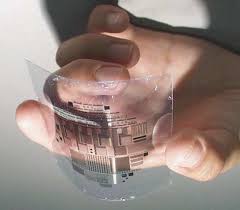
Shenzhen U-Sunny's N-1715 nano zirconium oxide dispersion, with material innovation as the core, promotes performance breakthroughs in the fields of optics, coatings, adhesives, etc. for flexible display substrates. Its high compatibility, environmental protection characteristics and cost advantages not only meet the needs of consumer electronics for thinness and high image quality, but also provide efficient and sustainable solutions for the chemical industry, leading the next generation of display technology revolution.