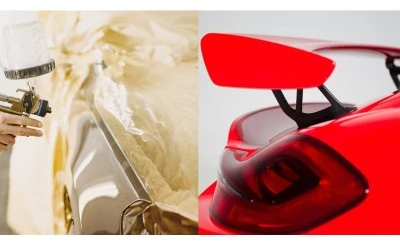
In the rapidly evolving fields of flexible electronics, automotive displays, and medical devices, flexible UV curing paint film has emerged as a transformative solution for durable, high-performance coatings. This article explores the technical advancements of UV-curable materials, with a focus on Shenzhen U-Sunny's LM-501 low-refractive-index monomer, and analyzes its applications and market potential.
1. Technical Breakthroughs in Flexible UV-Curable Coatings
The LM-501 monomer by U-Sunny features a refractive index of 1.42–1.45, achieved through fluorinated acrylate molecular design. This ultra-low refractive index minimizes light scattering, enabling coatings to achieve >97% transmittance while maintaining exceptional flexibility. Unlike traditional rigid coatings, LM-501's single-functional UV-curable structure reduces crosslinking shrinkage (<1.5%) and enhances adhesion to diverse substrates, including polycarbonate, PET, and silicone. Its ultra-low viscosity (≤200 cP) ensures uniform wetting on curved or micro-structured surfaces, critical for applications like foldable OLED screens and wearable devices.
Additionally, LM-501's solvent-free formulation aligns with global sustainability trends, complying with RoHS standards and reducing VOC emissions by up to 40% compared to solvent-based alternatives.
2. Applications Across Industries
Consumer Electronics: LM-501-based coatings are widely used in foldable smartphones and AR/VR lenses, where flexibility and optical clarity are paramount. The material's resistance to repeated bending (tested over 200,000 cycles) ensures long-term durability without delamination.
Automotive Displays: The film's high heat resistance (up to 150°C) and humidity stability make it ideal for in-car touchscreens, preventing yellowing or cracking under extreme conditions.
Medical Devices: LM-501's biocompatibility and low cytotoxicity support its use in flexible medical sensors and wearable health monitors. Its anti-microbial properties, enhanced by nanoparticle integration (e.g., AgNPs), reduce biofilm formation by 75%.
3. Advantages of UVLED Curing Technology
UVLED curing systems, such as those highlighted by Height-LED, complement LM-501's performance by offering energy-efficient, low-temperature curing. This eliminates thermal distortion risks for heat-sensitive substrates like PET films, achieving full curing within seconds. The technology's precision also enables ultra-thin coatings (5–10 μm), critical for miniaturized electronics and optical components.
4. Future Trends and Innovations
The demand for multifunctional flexible coatings is driving advancements in:
Self-Healing Properties: U-Sunny is integrating dynamic covalent bonds into LM-501, enabling coatings to autonomously repair micro-scratches at room temperature.
Smart Surfaces: Embedding SiO₂ or TiO₂ nanoparticles adds anti-fingerprint, anti-static, and anti-glare functionalities, meeting premium device requirements.
Eco-Friendly Formulations: Bio-based acrylates derived from soybean oil are being tested to further reduce environmental impact while maintaining performance.
Conclusion
Flexible UV curing paint film, exemplified by U-Sunny's LM-501, is redefining coating standards across industries. With its unparalleled optical performance, environmental compliance, and adaptability to next-gen technologies, LM-501 sets a benchmark for innovation. As the demand for foldable electronics and sustainable manufacturing grows, advancements in UV-curable materials will remain pivotal to achieving high-performance, eco-conscious solutions.