


In industrial processes like ceramic manufacturing, coal-water slurry preparation, and coatings, functional slurry dispersants play a pivotal role in achieving stable, homogeneous, and high-solid-content slurries. These additives optimize particle dispersion, reduce viscosity, and enhance product quality. This article explores the science behind slurry dispersants, their applications, and highlights Shenzhen U-Sunny's Elite-601 Wetting Dispersant as a cutting-edge solution.
Why Are Functional Slurry Dispersants Indispensable?
Slurry dispersants are surfactants that prevent particle agglomeration through three primary mechanisms:
Electrostatic Repulsion: Charged particles repel each other, minimizing clustering.
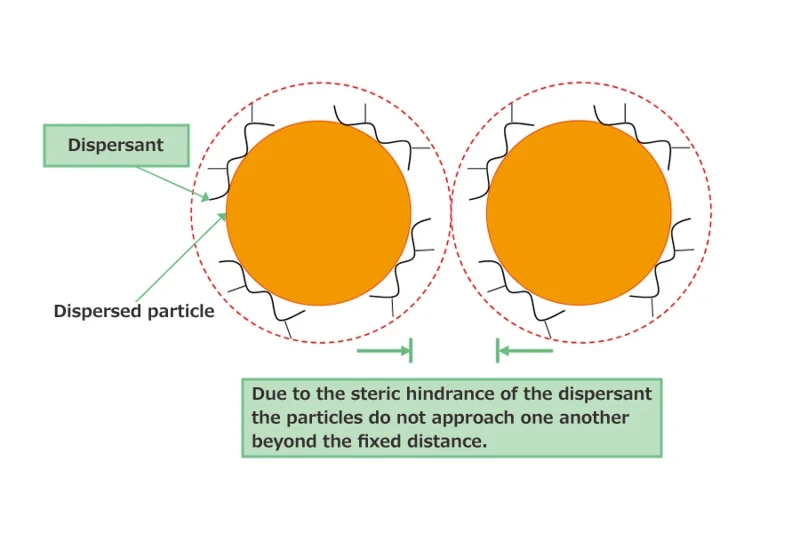
Steric Hindrance: Polymer chains on particle surfaces create physical barriers against aggregation.
Electrosteric Stabilization: A hybrid mechanism combining electrostatic and steric effects for enhanced stability .
In ceramic production, dispersants like sodium tripolyphosphate (STPP) adsorb onto particle surfaces, reducing interfacial tension and improving slurry fluidity. This results in uniform dispersion, higher solid content (up to 60–70%), and better final product aesthetics . Similarly, in coal-water slurries, lignin-based or polyacrylic acid dispersants enhance flowability and stability, critical for energy-efficient processing.
Applications Across Industries
Ceramics: Dispersants ensure rheological stability in porous filters and high-precision tiles.
Construction: Activators for steel slag grinding use dispersants like naphthalene sulfonates to boost early strength and volume stability .
Coatings & Inks: Organic dispersants like YH series improve pigment dispersion in high-solid-coating processes, enhancing paper smoothness and gloss .
Energy: In coal-water slurries, dispersants like ammonium sulfamate achieve low viscosity (139.2 mPa·s) and high stability, even at 62% coal concentration .
Elite-601 Dispersant: Technical Superiority
Shenzhen U-Sunny's Elite-601 stands out with its advanced formulation designed for multifunctional performance:
Rapid Particle Size Reduction: Achieves sub-70nm particle sizes faster than conventional dispersants, reducing processing time and energy costs .
Thermal Stability: Maintains viscosity stability for over 4 weeks at 50°C, ideal for high-temperature industrial environments .
Versatility: Compatible with inorganic pigments (e.g., kaolin, calcium carbonate) and organic systems, ensuring broad applicability.
Eco-Friendly: Low usage (0.4–0.8% of pigment weight) minimizes environmental impact while delivering high dispersion efficiency .
Compared to traditional options like STPP , Elite-601 combines electrostatic and steric stabilization mechanisms, offering superior slurry uniformity and long-term stability .
Optimizing Slurry Performance: Best Practices
Dosage Control: Overuse can destabilize slurries; follow manufacturer guidelines.
pH Adjustment: Optimal pH ranges (e.g., 8–10 for ceramics) maximize dispersant efficacy .
Compatibility Testing: Ensure dispersants align with other slurry components (e.g., binders, fillers).
Conclusion
Functional slurry dispersants are the backbone of efficient material processing across industries. Shenzhen U-Sunny's Elite-601 exemplifies innovation in this field, addressing challenges like particle agglomeration, viscosity control, and thermal stability. For industries seeking to enhance product quality and operational efficiency, adopting advanced dispersants is no longer optional-it's essential.