In the chemical industry, free radical curing resin has become the core choice in the field of high hardness materials due to its unique polymerization mechanism and excellent performance. This article will analyze this material in depth from the perspectives of technical principles, performance advantages, application scenarios and purchase guides.
1. Technical principle of free radical curing resin
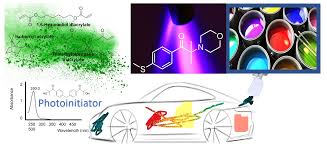
The polymerization reaction of free radical curing resin is activated by light or chemical initiators to produce highly active free radicals, triggering the chain cross-linking reaction of resin monomers, and finally forming a dense three-dimensional network structure. This process has the following characteristics:
High-efficiency polymerization: UV curing can be completed within minutes, greatly improving production efficiency.
Controllable depth curing: Studies have shown that the curing depth ratio of 2-3mm thick resin exceeds 80%, and when it exceeds 4mm, dual curing technology (light + chemical) is required to ensure full polymerization.
Low shrinkage: The curing shrinkage of the optimized formula resin can be less than 2%, reducing deformation or cracking caused by internal stress.
2. Core advantages of high-hardness resin
Excellent mechanical properties
Hardness performance: After curing, the hardness of some UV resins can reach 90D (Shore hardness), which is comparable to traditional metal materials, and has lightweight characteristics.
Abrasion resistance and scratch resistance: The addition of nanofillers (such as zirconium oxide) can enhance the interfacial bonding strength and increase the fracture toughness by more than 3 times.
Thermal stability: Liquid crystal epoxy resin achieves high temperature tolerance through cross-linking structure and is suitable for the automotive and aerospace fields.
Process adaptability
Complex modeling: High-viscosity UV resin is suitable for fine processes such as 3D curved surfaces and crystal characters, and the surface is smooth and defect-free after curing.
Environmental safety: Low-odor formula with international certification reduces production environmental hazards.
3. Industry application scenarios
Medical and dental: used for dental restoration resin, the hardness ratio (bottom/top) after curing exceeds 80%, meeting clinical durability requirements.
Industrial manufacturing: as the matrix resin of automotive composite materials, it combines lightweight and high toughness to replace traditional metal parts.
Crafts and jewelry: High-transparency UV resin can be cured quickly and presents a crystal-like luster, suitable for jewelry, models, etc.
Electronic packaging: Its chemical corrosion resistance makes it the preferred material for precision component packaging.
IV. Our Solutions
As a leading supplier in the chemical industry, our high-hardness free radical curing resin has the following advantages:
Excellent performance: hardness up to 90D, shrinkage <2%, yellowing resistance increased by 1.5 times.
Quick response: support customized outlet aperture to adapt to diverse process requirements.
Full-cycle service: provide one-stop technical support from formula optimization to production guidance.
Contact us now to get free samples and industry solutions!