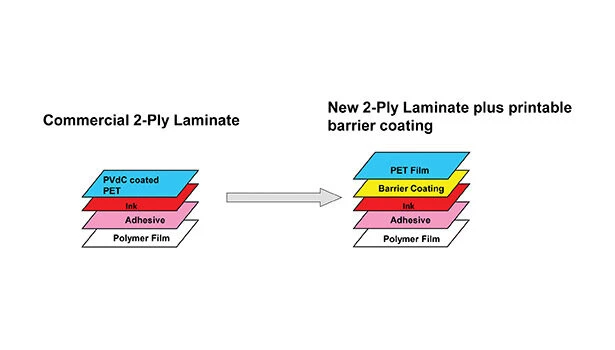
In the fields of food packaging, drug storage, electronic component protection, etc., oxygen barrier coating resin is a key technology to ensure product quality and extend shelf life. With the growing global demand for sustainable development and environmentally friendly materials, the chemical industry is accelerating the development of high-performance, biodegradable oxygen barrier coating resins. For example, chitosan-based coating technology has become a research hotspot in recent years due to its excellent oxygen barrier and environmental protection properties.
Core technology breakthrough of oxygen barrier coating resin
1. Innovative application of chitosan-based coating
Chitosan is a natural polysaccharide, which can significantly improve its oxygen barrier performance after modification by nanotechnology. Studies have shown that adding magnesium hydroxide (Mg(OH)₂) nanoparticles to chitosan solution can neutralize the acidic environment and enhance the density of the molecular chain, reducing the oxygen permeability to less than 1/3 of the traditional coating. This process not only avoids the material embrittlement problem caused by traditional NaOH treatment, but also improves the mechanical strength and thermal stability of the film, which is suitable for high-demand food packaging scenarios.
2. Synergistic effect of nanocomposites
The introduction of nanoparticles (such as Mg(OH)₂) is tightly combined with chitosan molecules through hydrogen bonding to form a uniform coating structure. This synergistic effect not only improves the oxygen barrier of the coating (oxygen permeability <0.5 cm³·μm/m²·day·kPa), but also gives the material antibacterial and moisture resistance, broadening its application potential in medical packaging and agricultural coating.
3. Environmental protection and biodegradability
Compared with traditional petroleum-based coating resins, chitosan-based materials are completely biodegradable, which complies with the EU and global restrictions on disposable plastic products. Experimental data show that its degradation cycle can be controlled within 6 months, and it does not produce microplastic pollution, making it the preferred material for sustainable packaging.
Industry application scenarios and market demand
1. Food packaging
High oxygen barrier coating resin can effectively delay food oxidation and deterioration, and extend the shelf life of fresh fruits, vegetables, meat and dairy products. For example, the packaging film with chitosan-nano Mg(OH)₂ composite coating can extend the shelf life of strawberries by more than 40%.
2. Pharmaceutical and electronic industries
In pharmaceutical packaging, oxygen barrier coating can prevent active ingredients from oxidizing and failing; in the protective layer of flexible electronic devices, its high barrier property can isolate moisture and oxygen from corroding the circuit and improve product reliability.
3. Agriculture and environmental protection
In degradable mulch and seed coating technology, oxygen barrier coating can not only control soil oxygen penetration, but also reduce plastic residues and promote the development of green agriculture.
Future trends: Intelligent and functional coatings
Responsive coating technology
Combined with oxygen-sensitive materials (such as those inspired by the HIF protein regulation mechanism), develop "intelligent coatings" that can dynamically adjust barrier properties to meet the needs of different storage environments.
Multi-material composite system
Combining chitosan with cellulose, graphene and other materials to further improve mechanical strength and barrier efficiency while reducing costs.
Scaled production process optimization
Through continuous casting and 3D printing technology, large-scale production of high-barrier coating resins can be achieved to meet the global market demand of over one million tons per year.
The innovation of oxygen barrier coating resin is the epitome of the chemical industry's transformation towards green and high performance. Bio-based materials represented by chitosan, combined with nanotechnology and intelligent design, are promoting sustainable development in packaging, medical, electronics and other fields. In the future, with policy support and technological progress, this market is expected to grow at an average annual rate of 8.5%, becoming a new growth pole for the chemical industry.